You flip a switch and a light comes on. You turn a tap and clean water flows. You order something online and it arrives in two days. You mail a letter and it reaches the other side of the country. None of these things are magic, but they all depend on vast systems that most of us never see, built over decades by millions of people, running quietly in the background of daily life.
The short answer is this: everyday life runs on infrastructure, networks of power, water, roads, ships, wires, and people, designed so that the complicated parts stay invisible and the simple parts just work.
Key Takeaways
- The power grid is the largest machine ever built, and it must balance supply and demand every second.
- Your tap water is treated, tested, and delivered through a system of pipes that is mostly underground and mostly old.
- Nearly everything you buy traveled on a container ship, a truck, and through a warehouse before it reached you.
- The weather forecast comes from supercomputers running physics models on data from satellites, radar, and weather stations.
- Time is kept by atomic clocks, and GPS satellites carry them, which is how your phone knows where you are.
- Every system you rely on was designed by people making trade-offs between cost, speed, reliability, and safety.
Table of Contents
The power grid: how electricity gets to you
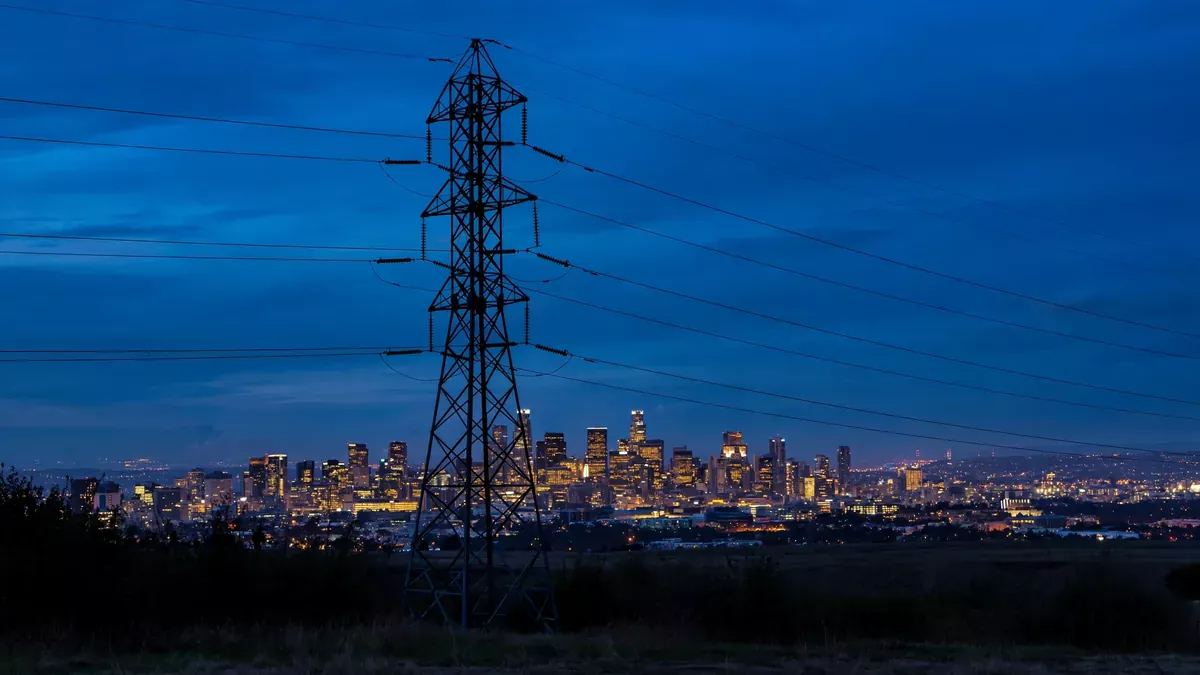
The power grid is often called the largest machine ever built, and the description is fair. It is a network of power plants, transmission lines, substations, and distribution wires that spans the entire continent, delivering electricity to hundreds of millions of people at the speed of light.
Electricity is generated at power plants, which convert some form of energy into electrical energy: burning natural gas or coal to spin a turbine, splitting atoms in a nuclear reactor, catching wind with a turbine, or collecting sunlight with solar panels. The generated electricity is alternating current, or AC, which changes direction 60 times per second in the United States.
From the plant, electricity travels through transmission lines at very high voltage, hundreds of thousands of volts, because high voltage means less energy is lost as heat over long distances. Substations step the voltage down in stages, and distribution lines carry it through neighborhoods at lower voltages. A transformer on a pole or in a box near your home steps it down one final time, to the 120 and 240 volts your house uses.
The grid must balance supply and demand every second. Unlike water, electricity cannot easily be stored at scale, so the amount being generated must match the amount being used at all times. Grid operators watch demand constantly and adjust generation up or down. When demand spikes on a hot afternoon, as millions of air conditioners switch on, operators bring additional power plants online. When demand falls at night, they scale back.
This balancing act is why blackouts happen. If demand exceeds supply, or a major transmission line fails, the grid protects itself by shedding load, cutting power to some areas to prevent a wider collapse. The system is designed with redundancy, so that the failure of any single component does not bring the whole grid down, but extreme weather and equipment failures can still overwhelm it.
Water: from reservoir to tap
Clean drinking water is one of the great public health achievements, and it is easy to take for granted. In the United States, most tap water comes from one of two sources: surface water, from rivers, lakes, and reservoirs, or groundwater, from wells drilled into underground aquifers.
Surface water goes through a treatment plant before it reaches your tap. The treatment process typically includes screening out large debris, coagulation and flocculation (adding chemicals that cause small particles to clump together), sedimentation (letting the clumps settle), filtration (passing the water through sand, gravel, and charcoal), and disinfection, usually with chlorine or chloramine, to kill bacteria and viruses. Fluoride is added in many communities to prevent tooth decay.
Groundwater is usually cleaner to start with, because the earth filters it naturally, but it still requires treatment and testing. Private wells, which serve about one in seven Americans, are not regulated the same way as public water systems, and owners are responsible for testing their own water.
The Environmental Protection Agency sets legal limits for more than 90 contaminants in public drinking water, and water utilities must test regularly and publish an annual water quality report, often called a Consumer Confidence Report. If your water has a strange taste, color, or smell, the report is a good place to start, and your utility is required to tell you what is in it.
Water reaches your home through a network of underground pipes, some of which are more than a century old. Pumps and gravity move it through the system, and water towers store it at height so that pressure stays steady even when demand spikes. A water tower is not just storage. It is a battery for pressure, using gravity to push water through the pipes without a pump running constantly.
The internet’s physical backbone
The internet feels wireless, but most of it is wires. The data that reaches your phone through Wi-Fi or cellular signal traveled most of its journey through fiber-optic cables, thin strands of glass that carry information as pulses of light.
Between continents, the cables lie on the ocean floor. There are hundreds of submarine cables crossing the world’s oceans, carrying the vast majority of international data. They are laid by specialized ships, buried in shallow water to protect them from anchors and fishing trawlers, and repaired by ships that grapple them up from the seabed when they break. A single cable can carry terabits of data per second.
On land, fiber runs along railways, highways, and power lines, connecting cities to each other and to data centers. The last stretch, from the street to your home, is the most expensive part to build, which is why internet speeds vary so much by neighborhood. The fiber in the ground is fast. The connection to your house may not be.
Data centers are the buildings where the internet lives. They are large, windowless warehouses full of servers, kept cool by industrial air conditioning, with backup generators and multiple power connections. When you save a file to the cloud, it is stored on a server in one of these buildings, usually copied to at least one other location for safety. How the internet and your devices work explains the software side of this story.
How food gets to the store
The food in your grocery store traveled an average of hundreds or thousands of miles to get there, through a supply chain that is one of the most complex systems humans have built.
It starts on farms, where crops are grown and animals are raised. From the farm, food goes to processing facilities, where it is cleaned, cut, packaged, and sometimes cooked or frozen. From processing, it goes to distribution centers, enormous warehouses where products from many suppliers are sorted and loaded onto trucks bound for individual stores.
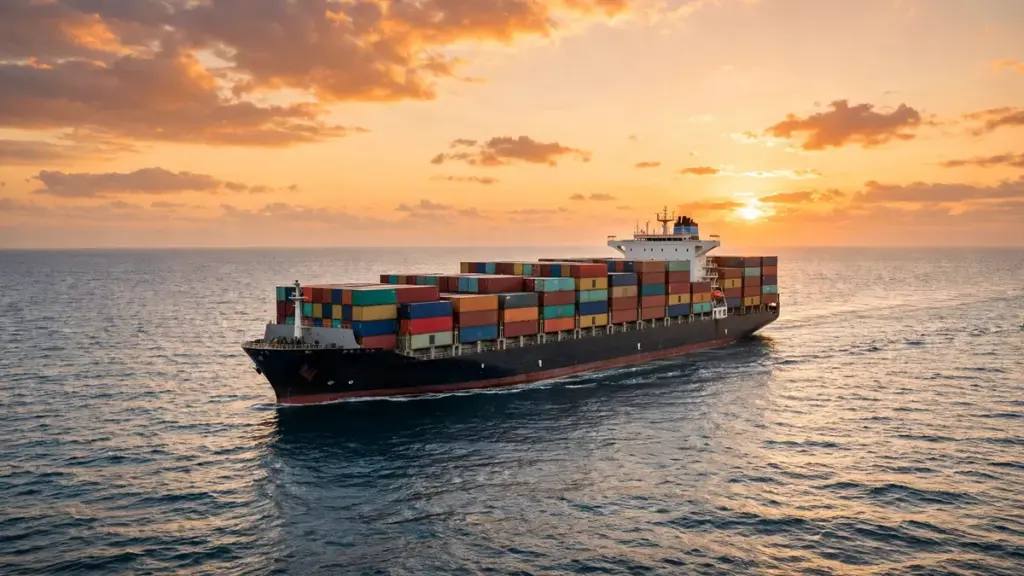
The system runs on just-in-time logistics. Stores keep only a few days of most products on hand, and trucks arrive on a tight schedule to restock. This keeps costs low and food fresh, but it also means the system has little slack. A disruption, a storm, a labor shortage, a border closure, can empty shelves quickly, as the pandemic demonstrated.
Refrigeration is the thread that holds it together. The cold chain, the unbroken series of refrigerated trucks, warehouses, and display cases, keeps perishable food safe from farm to shelf. A break in the cold chain, even for a few hours, can spoil an entire shipment.
Prices reflect the whole chain: the cost of growing, processing, transporting, storing, and selling, plus the store’s margin. A tomato that costs a dollar at the store may have cost a few cents to grow. The rest is logistics, labor, packaging, and the cost of the store itself.
How money moves
When you pay for something with a card, the money does not move immediately. What moves is information: a message from the store’s bank to your bank, authorizing the payment and promising to settle it later. The actual transfer of funds happens behind the scenes, in batches, through systems run by the Federal Reserve and private clearinghouses.
A card payment involves at least four parties: you, the merchant, your bank (the issuer), and the merchant’s bank (the acquirer), plus the card network that connects them. The merchant pays a fee for the service, typically 1 to 3 percent of the transaction, which is shared among the banks and the network. That fee is why some small businesses prefer cash or set a minimum for card payments.
Cash is simpler but rarer. Physical dollars are printed by the Bureau of Engraving and Printing, distributed by the Federal Reserve to banks, and circulated through the economy. A dollar bill lasts about six to seven years in circulation before it is worn out and replaced. Coins last decades.
Digital payments are growing faster than any other form. Peer-to-peer payment apps move money between individuals instantly, or nearly so, by holding balances in accounts and settling between banks in the background. The speed is real, but the money still moves through the same banking system, just with a faster interface on top. For the full story of how money works, see how money works in America.
How mail and packages find you
The United States Postal Service delivers to more than 160 million addresses, six days a week, for the price of a stamp. It is one of the largest civilian operations in the world, and it runs on a combination of automation and human knowledge.
Your ZIP code is the key to the system. The first three digits identify a sectional center, a large sorting facility serving a region. The next two digits identify a specific post office or delivery area. The full nine-digit ZIP+4 code narrows it to a block, a building, or a specific group of addresses.
Mail is sorted by machines that read addresses, spray a barcode on each piece, and route it through a series of conveyors and bins. A letter mailed in New York and addressed to Los Angeles is sorted at a facility near the sender, flown or trucked to a facility near the recipient, sorted again, and delivered by a carrier who knows the route. The whole process typically takes two to five days.
Packages follow a similar path but with more tracking. Private carriers and the Postal Service scan packages at each handoff, which is how tracking updates are generated. The last mile, the final delivery from a local facility to your door, is the most expensive part of the journey, accounting for more than half of the total shipping cost.
How roads and traffic work
Roads are designed in layers. The surface you drive on, asphalt or concrete, sits on a base of crushed stone, which sits on compacted soil. The layers spread the weight of vehicles so the ground beneath does not deform. Potholes form when water gets under the surface, freezes and expands, and breaks the pavement apart, which is why they appear in spring after a cold winter.
Traffic is a flow problem. Engineers study how vehicles move through intersections, highways, and merges, and they design signals, signs, and lane markings to keep the flow moving. A traffic signal is not just a timer. Modern signals use sensors in the road to detect waiting cars and adjust their timing in real time.
Congestion has a counterintuitive property: adding lanes to a highway often does not reduce traffic for long, because the new capacity attracts more drivers, a phenomenon called induced demand. People who previously avoided the highway, traveled at different times, or took another route switch to the improved road, and congestion returns. The long-term solutions involve alternatives to driving, pricing, and land use, not just wider roads.
Road maintenance is funded mostly by gas taxes and vehicle fees, though the federal gas tax has not been raised since 1993, which means its purchasing power has declined significantly. Electric vehicles, which do not buy gas, contribute nothing through the gas tax, and states are experimenting with mileage-based fees and registration surcharges to close the gap.
How the weather is forecast
A weather forecast is a physics calculation. Meteorologists start with observations: temperature, pressure, humidity, wind speed and direction, collected from weather stations, weather balloons, buoys, aircraft, radar, and satellites. These observations describe the current state of the atmosphere.
That data feeds into numerical weather prediction models, which divide the atmosphere into a three-dimensional grid and simulate how air, moisture, and heat will move through it over time, using the laws of physics. The models run on supercomputers, because the calculations are enormous: a single forecast involves billions of computations.
The forecast you see is not from one model but from several, and forecasters compare them. When the models agree, confidence is high. When they disagree, the forecast is uncertain, which is why a five-day forecast is less reliable than a one-day forecast. Small errors in the initial observations grow over time, which is the fundamental limit on how far ahead weather can be predicted.
Satellites are the most important observation tool. Geostationary satellites sit above one spot on Earth and watch the same region continuously, tracking storms and cloud movements. Polar-orbiting satellites circle the planet and provide detailed measurements of temperature and moisture at different heights. Together, they give forecasters a picture of the whole atmosphere that no ground network could match.
How time is kept
Time is measured by atomic clocks, the most accurate timekeeping devices ever built. An atomic clock works by counting the oscillations of atoms, typically cesium or rubidium, as they transition between energy states. These oscillations happen at an extremely stable frequency, which makes the clock accurate to within a second over millions of years.
The official time in the United States is maintained by the National Institute of Standards and Technology, which operates atomic clocks in Colorado and combines their readings to produce the national time standard. That time is broadcast by radio, distributed over the internet, and used to synchronize everything from cell phone networks to the stock market.
Your phone gets its time from GPS satellites, each of which carries atomic clocks. The satellites broadcast the time along with their position, and your phone calculates its location by comparing the signals from multiple satellites. The system is so precise that it must account for Einstein’s theory of relativity: time passes slightly faster on a satellite in orbit than on the ground, and the system corrects for the difference.
Time zones are a human invention, not a physical one. The Earth is divided into 24 zones, roughly corresponding to the sun’s position, but the boundaries follow political lines, not straight meridians. Daylight saving time, observed in most of the United States, shifts the clock forward in spring and back in fall, a practice that remains controversial and is periodically debated in Congress.
How emergency services work
When you call 911 in the United States, your call goes to a Public Safety Answering Point, a dispatch center staffed by trained operators. The operator asks what the emergency is, where it is, and who is involved, and dispatches the appropriate responders: police, fire, or ambulance.
Location is the hardest part. A call from a landline automatically provides the address. A call from a mobile phone provides an approximate location based on cell towers and GPS, which is usually accurate to within a few dozen meters but not always to a specific apartment or floor. That is why the operator asks for your address even when the system shows a location.
Dispatchers prioritize calls by severity. A cardiac arrest gets an ambulance immediately. A noise complaint waits. The system is designed to send the right resources to the most urgent situations first, and dispatchers are trained to give instructions over the phone, including CPR guidance, while help is on the way.
Response times vary by location. Urban areas with nearby fire stations and hospitals respond faster than rural areas, where the nearest ambulance may be many miles away. The national average response time for an ambulance is around 8 to 10 minutes in cities, longer in rural areas. Those minutes matter, which is why knowing basic first aid and CPR is one of the most useful skills a person can learn.
Common myths about everyday systems
Myth: Lightning never strikes the same place twice. It does, often. Tall buildings and towers are struck repeatedly. The Empire State Building is struck dozens of times a year. Lightning follows the path of least resistance, and a tall conductive structure is always an attractive target.
Myth: The Great Wall of China is visible from space. It is not visible from orbit with the naked eye. The wall is long but narrow, and it blends into the landscape. The myth persists because it sounds like it should be true.
Myth: Goldfish have a three-second memory. They do not. Goldfish can learn and remember things for months, including how to navigate a maze and when feeding time is. The three-second claim has no scientific basis.
Myth: You should wait 24 hours before reporting a missing person. You should not. There is no waiting period for reporting a missing person in the United States. The first hours are the most important, and police want to hear about it immediately.
Myth: The five-second rule is safe. It is not. Bacteria transfer to food almost instantly on contact with a contaminated surface. The amount transferred increases with time, but there is no safe window. The rule is a joke, not a guideline.
Frequently asked questions
Why does my power go out during a storm?
Most outages are caused by trees falling on power lines, lightning strikes, or high winds damaging equipment. Underground lines are protected from weather but are more expensive to install and harder to repair, which is why most neighborhoods still use overhead lines.
Is tap water safe to drink?
In the United States, public tap water is regulated by the EPA and is generally safe. If you have concerns, your water utility’s annual quality report lists what was found in testing. Private well owners should test their water regularly, since wells are not covered by the same regulations.
Why do packages take so long to arrive?
A package travels through sorting facilities, trucks, and planes, and the last mile is the slowest part. Delays usually come from volume, weather, or a missed handoff between carriers. Tracking updates show where the package was last scanned, not where it is right now.
How accurate is the weather forecast?
A one-day forecast is very accurate. A three-day forecast is usually reliable. Beyond five days, accuracy drops significantly, because small errors in the initial data grow over time. The forecast is a probability, not a promise.
Why do we have time zones?
Before time zones, every town kept its own local time based on the sun, which made railway schedules impossible. Standard time zones were introduced in the late 1800s so that trains could run on a consistent schedule. The system we use today is a direct descendant of that railway solution.
Related reading
- Why Do Stores Play Music? The Science of Shopping Soundtracks
- How Holiday Shipping Actually Works (and Why Your Package Takes So Long)
- Why Are There So Many Mattress Stores?
- Who Decides When Thanksgiving Is?
- Why Do We Tip in America?
- Why Do We Say “Cheese” When Taking a Photo?
- How Do Fireworks Get Their Colors?
- Why Is the Sky Dark at Night If There Are So Many Stars?
- What Makes Something Smell Good or Bad?
- Why Do We Dream?
- How Do Bees Decide Where to Build a Hive?
- Why Is the Ocean Salty?
- How Do Airplanes Stay Up?
- Why Do We Have Leap Years?
- Why Does Popcorn Pop?
- Why Do We See Lightning Before We Hear Thunder?
- How Do Mirrors Actually Work?
- Why Do Onions Make You Cry?
- What Is the Difference Between a Hurricane and a Tornado?
- Why Do We Have Different Time Zones?
Sources and further reading
- US Department of Energy: energy.gov: how the power grid works and how electricity is generated.
- US Geological Survey: usgs.gov: water resources, earthquakes, and the science of the natural world.
- United States Postal Service: usps.com: how mail is sorted and delivered.
- National Oceanic and Atmospheric Administration: noaa.gov: weather forecasting, satellites, and climate data.
- National Institute of Standards and Technology: nist.gov: atomic clocks, timekeeping, and measurement standards.
For more everyday curiosity, see our Curiosity section, and for the systems inside your own life, how money works in America, how the internet and your devices work, and how your home works.
This article is for general educational and informational purposes only and is not financial, legal, insurance, tax, or medical advice. Always consult a qualified professional regarding your specific situation.