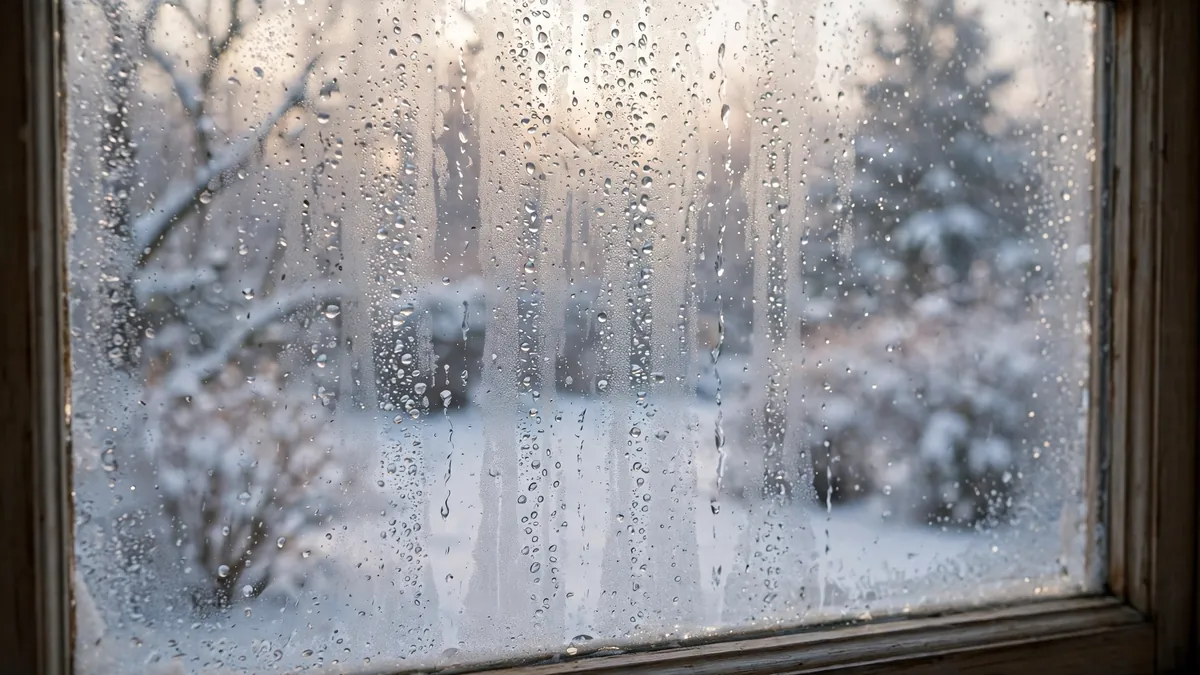
You wake up on a cold winter morning, and your windows are covered in water droplets. The glass is fogged, the sills are damp, and in the worst cases, there is a small puddle on the windowsill. You wipe it away, but by the next morning, it is back. Is your house leaking? Are your windows broken? Is something wrong with your heating?
Almost certainly not. The water on your windows is condensation, and it is one of the most common winter phenomena in American homes. It happens when warm, humid indoor air meets cold window glass. Understanding why it happens, and when it matters, can help you keep your windows clear, your home healthy, and your heating bill under control.
The short answer is this: windows get condensation in winter because the glass is the coldest surface in a typical room. Warm indoor air holds water vapor. When that air touches the cold glass, it cools, and the water vapor condenses into liquid droplets. The colder the glass and the more humid the indoor air, the more condensation forms. Single-pane windows fog first because their glass is coldest; double-pane and triple-pane windows have warmer interior glass and fog less.
Key Takeaways
- Condensation forms when warm, humid air contacts a cold surface. The air cools below its dew point, and water vapor condenses into liquid droplets on the surface.
- Windows are the coldest surface in most rooms in winter, so condensation forms there first. Single-pane windows have the coldest glass and fog most readily.
- Indoor humidity comes from cooking, showering, laundry, breathing, houseplants, and other everyday activities. A family of four produces about 2 to 3 gallons of water vapor per day through breathing and perspiration alone.
- Ideal indoor humidity in winter is 30 to 50 percent. Below 30 percent is too dry; above 50 percent promotes condensation, mold growth, and dust mites. A hygrometer costs $10 to $20 and measures indoor humidity.
- Occasional morning condensation is normal. Persistent condensation, condensation between the panes of a double-pane window (seal failure), or condensation that causes mold, wood rot, or peeling paint is a problem.
- Reduce condensation by lowering indoor humidity (exhaust fans, dehumidifier, venting dryers outdoors), improving air circulation (fans, open curtains), and upgrading to better-insulated windows.
Table of Contents
What condensation is, and why it picks your windows
Condensation is the process by which water vapor in the air turns into liquid water. It happens when air cools below its dew point, the temperature at which the air is saturated with water vapor and cannot hold any more. When warm, humid air touches a cold surface, the air near the surface cools, reaches its dew point, and deposits water droplets on the surface.
You see condensation every day: on a cold drink on a summer day, on a bathroom mirror after a hot shower, on the inside of a car windshield on a cold morning. The principle is the same in each case: warm, moist air meets a cold surface, and water condenses.
In winter, your windows are the coldest surface in most rooms. Walls are insulated, floors are covered, and ceilings are warmed by rising heat. Windows, even double-pane windows, are the weakest link in your home’s thermal envelope. Glass conducts heat much more readily than insulated walls, so the interior surface of a window is significantly colder than the surrounding wall.
On a cold winter night, the outdoor temperature may be 20 degrees Fahrenheit, while the indoor temperature is 70 degrees. The interior surface of a single-pane window may be 40 to 45 degrees, well below the dew point of typical indoor air (which is around 50 to 55 degrees at 40 percent relative humidity). When indoor air touches the cold glass, it cools below its dew point, and condensation forms.
The amount of condensation depends on two factors: how cold the glass is, and how humid the indoor air is. Colder glass produces more condensation. More humid air produces more condensation. A single-pane window in a humid home will be covered in water; a triple-pane window in a dry home may stay clear all winter.
Condensation typically forms at night and in the early morning, when outdoor temperatures are lowest and the glass is coldest. It may evaporate during the day as the sun warms the glass and the indoor temperature rises. If the condensation persists throughout the day, or if it is heavy enough to drip and pool on the sill, the indoor humidity is likely too high or the windows are poorly insulated.
Where indoor humidity comes from
Indoor humidity comes from everyday activities, and it adds up quickly.
Cooking is a major source. Boiling a pot of water releases steam into the kitchen. A dishwasher releases moisture during its drying cycle. An uncovered pot on the stove can release a pint of water vapor per hour. Using a range hood or exhaust fan while cooking removes much of this moisture.
Showering and bathing are the largest single source of indoor humidity. A 10-minute hot shower releases about half a pint of water vapor into the bathroom. If the bathroom is not ventilated, the moisture spreads throughout the house. Running the bathroom exhaust fan during and for 20 minutes after a shower removes most of it.
Laundry also contributes. A washing machine releases moisture, and a clothes dryer vented indoors releases a large amount of warm, humid air. Dryers should always be vented outdoors. Drying clothes on an indoor rack releases all of the moisture from the clothes into the air.
Breathing and perspiration are a constant, often overlooked source. A family of four produces about 2 to 3 gallons of water vapor per day through breathing and perspiration. This is why bedrooms often have the worst condensation: two people sleeping in a closed room for eight hours release a significant amount of moisture, with no ventilation to remove it.
Houseplants release moisture through transpiration, the process by which plants release water vapor from their leaves. A large collection of houseplants can noticeably increase indoor humidity. Aquariums, with their large water surface, also evaporate water into the air.
In winter, homes are sealed tight to keep heat in, which traps humidity inside. Modern, energy-efficient homes are particularly prone to high indoor humidity, because they are so well sealed that moisture has nowhere to go. Older, draftier homes have lower indoor humidity, because air leaks allow moisture to escape, but they also lose more heat.
Why single-pane windows fog first
Not all windows fog equally. The type of window makes a significant difference in how much condensation forms.
Single-pane windows have one layer of glass, typically 1/8 inch thick. Glass is a poor insulator, with an R-value of about 0.9 for a single pane. The interior surface of a single-pane window is very cold in winter, often 20 to 30 degrees colder than the room temperature. Condensation forms readily and heavily on single-pane windows, especially on cold nights.
Double-pane windows have two layers of glass separated by an air gap, typically 1/2 inch to 3/4 inch wide. The air gap insulates, reducing heat transfer and keeping the interior glass warmer. A standard double-pane window has an R-value of about 2.0, more than double that of a single-pane window. The interior glass surface is warmer, often only 10 to 15 degrees colder than the room temperature, so condensation forms less readily and less heavily.
Double-pane windows with low-emissivity (low-E) coatings and argon gas fill perform even better. Low-E coatings are thin, transparent layers of metal oxide on the glass that reflect infrared radiation, reducing heat transfer. Argon gas, which is denser than air, fills the gap between the panes, providing better insulation. A double-pane window with low-E coating and argon fill has an R-value of 3.0 to 4.0, and the interior glass stays warm enough to resist condensation in most conditions.
Triple-pane windows have three layers of glass and two air gaps, with an R-value of 5.0 to 7.0. The interior glass is warmer still, and condensation is rare except in very cold weather with very high indoor humidity. Triple-pane windows are common in cold climates (northern Europe, Canada, northern US) but less common in milder regions due to their higher cost and weight.
The window frame also matters. Aluminum frames conduct cold readily, and the frame can be the coldest part of the window, causing condensation to form on the frame first. Vinyl and wood frames are better insulators and stay warmer. Thermally broken aluminum frames (with a plastic insulator separating the interior and exterior aluminum) perform better than standard aluminum frames.
If you have single-pane windows and persistent condensation, upgrading to double-pane windows will reduce condensation significantly. However, window replacement is expensive ($500 to $1,500 per window installed). Less expensive options include adding interior storm windows, applying window insulation film (a clear plastic sheet that creates an insulating air gap), or using a dehumidifier to lower indoor humidity.
When condensation is a warning sign
Occasional condensation on windows in the morning is normal and harmless. It evaporates during the day and causes no damage. However, persistent or heavy condensation can indicate a problem and can cause damage if left unaddressed.
Condensation between the panes of a double-pane or triple-pane window is a sign of seal failure. The seal around the edge of the insulating glass unit keeps the air or argon gas inside and moisture outside. If the seal fails, moist air enters the gap, and condensation forms between the panes, where it cannot be wiped away. The window loses its insulating value, and the glass may appear foggy or streaked permanently. A window with seal failure needs to be replaced; the glass unit cannot be repaired.
Persistent condensation that does not evaporate during the day indicates that indoor humidity is too high. High indoor humidity promotes mold growth, dust mites, and wood rot. Mold can grow on window sills, frames, and surrounding walls, causing health problems (respiratory issues, allergies) and damage to the home. Wood window frames and sills can rot if they stay damp, leading to costly repairs.
Condensation that drips and pools on the sill can damage paint, stain wood, and cause the sill to rot. If you notice water pooling on your windowsills, wipe it up promptly and address the underlying humidity problem.
Ice on the inside of windows, in very cold weather, indicates that the interior glass surface is below freezing. This is more common with single-pane windows and in homes with high indoor humidity. Ice on windows can damage the frame and sill as it melts and refreezes, and it indicates that the window is poorly insulated.
If you notice mold, rot, peeling paint, or persistent dampness around your windows, have the problem assessed. A home inspector or window contractor can determine whether the issue is high humidity, poor insulation, or a failed window seal, and recommend appropriate solutions.
How to stop it
Reducing window condensation involves lowering indoor humidity, improving air circulation, and improving window insulation. Often, a combination of approaches works best.
Reduce indoor humidity. Use exhaust fans in bathrooms and kitchens. Run the bathroom fan during and for 20 minutes after a shower. Use the range hood when cooking, especially when boiling water. Vent clothes dryers outdoors. Avoid drying clothes indoors. If you have a basement, use a dehumidifier, as basements are often the most humid part of a home. A dehumidifier can lower indoor humidity by 10 to 20 percent, which is often enough to eliminate condensation.
Improve air circulation. Warm air holds more moisture than cold air, and circulating warm air to the windows keeps the glass warmer and reduces condensation. Run ceiling fans on low speed in winter (reversed to push warm air down). Open interior doors to allow air to circulate. Keep curtains and blinds open during the day to allow warm air to reach the windows; closed curtains trap cold air against the glass and increase condensation. If you close curtains at night for privacy or insulation, open them in the morning to allow the glass to warm and the condensation to evaporate.
Increase ventilation. Opening windows briefly on dry, cold days brings in dry outdoor air and expels humid indoor air. Even 10 to 15 minutes of ventilation can significantly reduce indoor humidity. A heat recovery ventilator (HRV) or energy recovery ventilator (ERV) provides continuous ventilation without losing much heat, by transferring heat from the outgoing air to the incoming air. HRVs and ERVs are particularly useful in well-sealed, energy-efficient homes.
Improve window insulation. If you have single-pane windows, consider adding interior storm windows or applying window insulation film. Interior storm windows are clear panels that fit inside the window frame, creating an insulating air gap. Window insulation film is a clear plastic sheet applied to the window frame with double-sided tape and shrunk with a hair dryer to create a tight, transparent barrier. Both options are inexpensive ($20 to $50 per window) and can significantly reduce condensation.
If you are replacing windows, choose double-pane or triple-pane windows with low-E coatings and argon gas fill. The warmer interior glass will resist condensation in most conditions. Also consider the frame material: vinyl and wood frames insulate better than aluminum.
Monitor indoor humidity with a hygrometer. Aim for 30 to 50 percent relative humidity in winter. If humidity is consistently above 50 percent, take steps to reduce it. If it is below 30 percent, the air is too dry, and you may need a humidifier to prevent dry skin, irritated sinuses, and static electricity.
Frequently asked questions
Is condensation on windows bad for my health? Condensation itself is not harmful; it is just water. However, persistent condensation can lead to mold growth on window sills and frames, and mold can cause respiratory problems, allergies, and other health issues. If you see mold around your windows, clean it promptly with a mixture of water and detergent, and address the humidity problem that caused it.
Why do my windows fog up only in the morning? Windows fog in the morning because outdoor temperatures are lowest overnight, making the glass coldest. Indoor humidity also builds up overnight, as people breathe and the house is sealed. The combination of cold glass and high humidity produces condensation. During the day, the sun warms the glass and the indoor temperature rises, causing the condensation to evaporate.
Should I wipe condensation off my windows? Yes. Wiping condensation off windows prevents water from pooling on the sill, which can cause wood rot, paint damage, and mold growth. Use a towel or a squeegee to remove the water, and wring the towel out in a sink. Wiping is a temporary solution; addressing the underlying humidity or insulation problem is the long-term fix.
Can I use a hair dryer to remove condensation? Yes, a hair dryer on a low heat setting can evaporate condensation quickly. However, this is a temporary fix. The condensation will return if the underlying humidity or insulation problem is not addressed. A hair dryer is useful for quickly clearing a window, but it does not solve the problem.
What is the difference between condensation and a window leak? Condensation is water vapor from indoor air that condenses on cold glass. It forms on the interior surface of the window, typically in the morning, and evaporates during the day. A window leak is water from outside (rain, snowmelt) that enters through a failed seal, cracked frame, or damaged flashing. Leaks cause water to appear on the sill or wall even when it is not cold, and they do not evaporate. If you see water on your windows when it is raining, it may be a leak. If you see water on a cold, dry morning, it is condensation.
Sources and further reading
- US Department of Energy: energy.gov: guidance on windows, insulation, moisture control, and how to improve your home’s energy efficiency.
- USA.gov: usa.gov: information on home maintenance, healthy homes, and finding licensed contractors for window replacement and repair.
- US Department of Housing and Urban Development: hud.gov: resources on healthy homes, moisture control, mold prevention, and indoor air quality.
For more on how your home works, see how your home actually works. Water heating is covered in how does a water heater work, and heating costs in why is my house cold at 70 degrees. Our Home & Real Estate section covers more of it.
This article is for general educational and informational purposes only and is not financial, legal, insurance, tax, or medical advice. Always consult a qualified professional regarding your specific situation.