The thermostat says 70 degrees. The furnace is running. The house should feel warm. But you are wearing a sweater, your feet are cold, and the room by the window feels like a different climate. You turn the thermostat up to 72, then 74, and it still does not feel right. What is going on?
The short answer is this: the thermostat measures air temperature at one spot, usually on an interior wall. It does not measure what your body actually feels, which depends on the temperature of the surfaces around you, the movement of air, and the humidity. A house can be 70 degrees on the thermostat and still feel cold, because the walls, windows, and floors are colder than the air, because drafts are moving cold air across your skin, and because dry winter air feels colder than humid air at the same temperature.
Key Takeaways
- The thermostat measures air temperature at one location. It does not measure radiant temperature, drafts, or humidity.
- Cold walls and windows pull heat from your body by radiation, making you feel cold even when the air is warm.
- Air leaks around windows, doors, outlets, and recessed lights are often the biggest source of winter discomfort.
- Low indoor humidity, often 10 to 20 percent in winter, makes the air feel colder and dries out skin and sinuses.
- Warm air rises, so the ceiling can be several degrees warmer than the floor. Stratification makes your feet cold while your head is warm.
- A home energy audit, often free or low-cost through your utility, can identify the specific problems in your house.
Table of Contents
What the thermostat actually measures
A thermostat is a simple device. It has a temperature sensor, and it turns the heating system on when the air around the sensor drops below the set point, and off when it rises above it. The sensor measures the temperature of the air at the thermostat’s location, usually on an interior wall, about chest height, in a central room.
That measurement is useful, but it is incomplete. The thermostat does not know the temperature of the walls, the windows, or the floor. It does not know whether there is a draft blowing across the room. It does not know the humidity. It does not know that the bedroom at the end of the hall is five degrees colder than the living room.
Your body, on the other hand, responds to all of these factors. Human comfort depends on air temperature, radiant temperature (the temperature of the surfaces around you), air movement, and humidity. The thermostat measures only the first of these. When the other three are unfavorable, you feel cold, even at 70 degrees.
The gap between the thermostat reading and your comfort is the gap this article explains.
Radiant temperature: the cold wall problem
Your body loses heat in four ways: conduction (direct contact with a cold surface), convection (air moving across your skin), evaporation (moisture leaving your skin), and radiation (heat traveling from your warm body to colder surfaces nearby, without any air movement).
Radiation is the one most people overlook. You do not need to touch a cold wall to lose heat to it. Your body radiates heat toward any surface that is colder than you are, just as the sun radiates heat toward the earth. The colder the surface, and the larger it is, the more heat you lose.
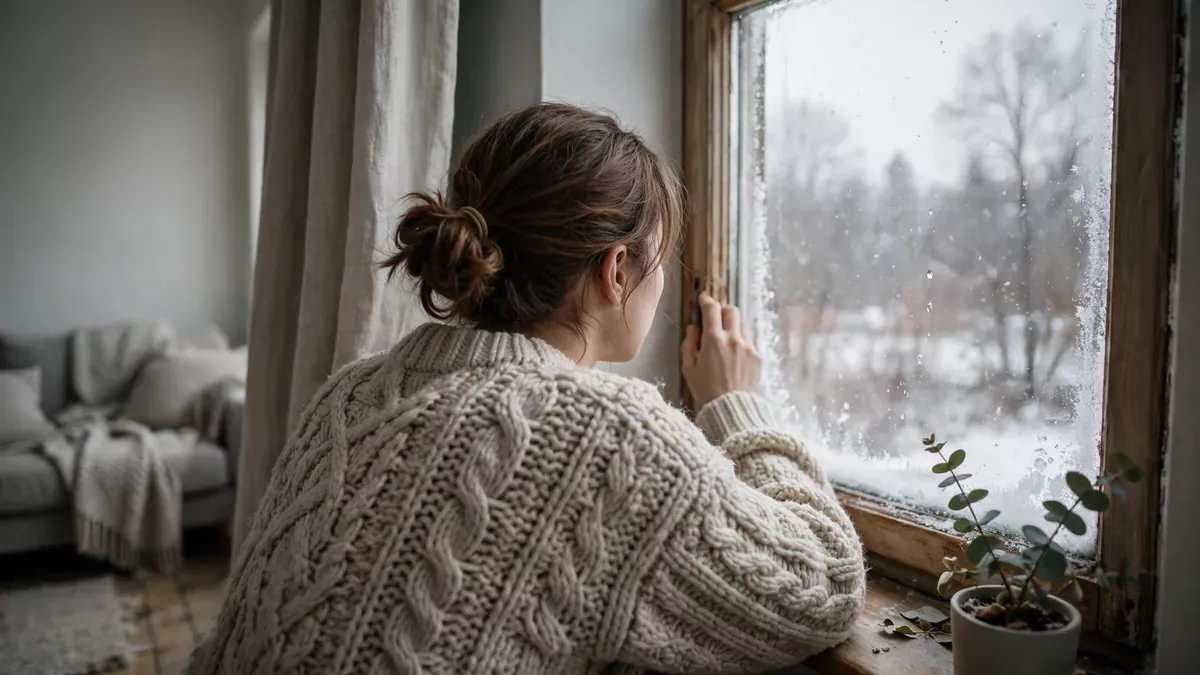
In a typical house, the coldest surfaces are the windows and the exterior walls. A single-pane window in winter can be close to the outdoor temperature on its inner surface. An exterior wall with poor insulation can be several degrees colder than the room air. When you sit near a window or an exterior wall, your body radiates heat toward that cold surface, and you feel a chill, even though the air temperature is 70 degrees.
The effect is strongest in rooms with large windows, or with walls that face north, or with poor insulation. A room with a big picture window can feel cold even when the thermostat is satisfied, because the window is a large, cold surface pulling heat from everyone in the room.
The fix for radiant heat loss is to warm the surfaces, or to block the radiation. Heavy curtains over windows, especially at night, create a barrier between you and the cold glass. Insulating the walls, if they are uninsulated, raises the surface temperature. Even a rug on a cold floor helps, because it insulates your feet from the cold surface.
Air leaks: the draft problem
Air leaks, also called infiltration, are often the biggest source of winter discomfort, and the most cost-effective problem to fix.
A house is not airtight. Air leaks in through gaps around windows and doors, through cracks in the foundation, through holes where pipes and wires pass through walls, through recessed lights, through attic hatches, and through the gaps around electrical outlets on exterior walls. In winter, cold outdoor air enters through leaks at the lower levels of the house, and warm indoor air escapes through leaks at the upper levels. The pattern is called the stack effect, because warm air rises, like smoke up a chimney.
The result is drafts: streams of cold air moving across the floor, around windows, and through the house. A draft of 50-degree air moving at a few feet per second feels cold, even if the room air is 70 degrees, because the moving air strips heat from your skin by convection. The faster the air moves, the colder it feels.
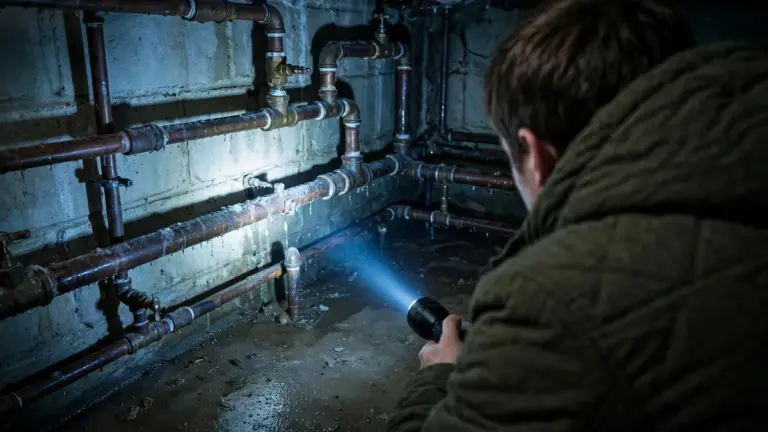
You can find air leaks by feel. On a cold, windy day, hold your hand near windows, doors, outlets, and baseboards. If you feel a stream of cold air, you have found a leak. A more systematic method is a blower door test, which a home energy auditor performs by sealing the house and using a fan to depressurize it, revealing leaks that are not obvious by feel.
The fixes are often simple and inexpensive: weatherstripping around doors, caulking around windows, foam gaskets behind outlet covers on exterior walls, sealing gaps around pipes and wires with caulk or foam, and sealing the attic hatch. The US Department of Energy estimates that air sealing can reduce heating costs, but the comfort improvement is often more noticeable than the cost savings. A house without drafts feels warmer at the same thermostat setting.
Humidity: the dry air problem
Winter air is dry air. Cold outdoor air holds very little moisture. When that air enters the house and is heated to 70 degrees, its relative humidity drops to 10 or 20 percent, far below the 30 to 50 percent range that is generally considered comfortable.
Dry air feels colder than humid air at the same temperature, for two reasons. First, dry air increases evaporation from your skin, which cools you. Second, dry air irritates the nasal passages and throat, which makes you feel less comfortable overall.
Dry air also causes other winter problems: static electricity, dry skin, cracked lips, nosebleeds, and damage to wood furniture and musical instruments. It can worsen respiratory conditions, because dry nasal passages are less effective at filtering out viruses and particles.
A humidifier can help. A portable humidifier in the bedroom, or a whole-house humidifier attached to the furnace, can raise indoor humidity to the 30 to 40 percent range. Be careful not to over-humidify: humidity above 50 percent can cause condensation on windows and promote mold growth. A hygrometer, a small device that measures humidity, costs a few dollars and tells you where you stand.
Stratification: the warm ceiling, cold floor problem
Warm air is less dense than cold air, so it rises. In a heated house, the warmest air collects near the ceiling, and the coldest air pools near the floor. The difference can be several degrees, especially in rooms with high ceilings, or with a heating system that delivers warm air from ceiling vents.
The result is that your head is warm and your feet are cold. The thermostat, mounted at chest height, reads the middle of the range. Your feet, at floor level, are in the coldest air in the room. If you sit on the floor, or if you have cold feet, the room feels cold, even though the thermostat says 70.
Stratification is worse in houses with poor air circulation. A forced-air heating system that runs in short cycles does not mix the air well. A house with radiators or baseboard heat, which relies on natural convection, can have more stratification than a house with a well-designed forced-air system.
A ceiling fan can help, if it has a reverse setting. In winter, running a ceiling fan on low speed in reverse (clockwise, when viewed from below) pushes the warm air near the ceiling down along the walls, mixing it with the cooler air below, without creating a draft. The fan should run slowly, so that you do not feel air movement. The effect is subtle but real.
Thermostat placement: the wrong room problem
The thermostat measures the temperature where it is, not where you are. If the thermostat is in a warm room, it will turn the heat off before the colder rooms are comfortable. If it is in a cold room, it will run the heat longer than necessary, overheating the warm rooms.
Common thermostat placement problems include: a thermostat on an exterior wall, where it is influenced by the cold wall; a thermostat near a heat source, such as a lamp, a television, or a sunny window, where it reads warmer than the room; a thermostat in a hallway, where the temperature does not reflect the living spaces; and a thermostat near a door, where drafts affect the reading.
If your house has rooms that are consistently colder or warmer than the thermostat reading, the thermostat location may be part of the problem. Moving a thermostat is a job for an HVAC technician, but a simpler solution is to use a smart thermostat with remote sensors, which can average the temperature across multiple rooms, or prioritize the room you are using.
Insulation: the long-term fix
Insulation slows the transfer of heat through walls, ceilings, and floors. The more insulation, and the better its quality, the warmer the interior surfaces and the lower the heating bill.
The most important place to insulate is the attic, because heat rises, and the attic is where the most heat escapes. The US Department of Energy recommends attic insulation levels that vary by climate zone, but in most of the northern United States, the target is an R-value of R-38 to R-60, which corresponds to about 10 to 16 inches of fiberglass batts or blown-in insulation, depending on the material.
Walls are harder to insulate after construction, because the insulation is inside the wall cavity. If your house was built before the 1970s, the walls may have little or no insulation. Blown-in insulation can be added to existing walls through small holes, a job for a professional.
Floors over unheated spaces, such as a crawl space or an unheated garage, can also be insulated. A cold floor makes the whole room feel cold, because your feet are in contact with it, and because it radiates cold upward.
Insulation is a long-term investment, not a quick fix. But it is the most effective way to raise the temperature of the surfaces in your house, which is the root cause of the radiant heat loss that makes 70 degrees feel cold.
What to check first
If your house feels cold at 70 degrees, start with the simple checks.
Feel for drafts around windows and doors. If you find them, add weatherstripping or caulking. The fix is cheap and the improvement is immediate.
Check the humidity with a hygrometer. If it is below 30 percent, consider a humidifier. The air will feel warmer, and your skin and sinuses will thank you.
Check for blocked vents and radiators. Furniture, curtains, or rugs can block the flow of warm air, creating cold spots. Make sure that heating vents are open and unobstructed.
Check the attic insulation. If you can see the joists, you probably do not have enough insulation. Adding insulation is one of the most cost-effective home improvements.
Consider a home energy audit. Many utilities offer audits for free or at low cost. An auditor will perform a blower door test, inspect the insulation, and provide a prioritized list of improvements. The audit takes a few hours and gives you a clear picture of what your house needs.
Frequently asked questions
Should I just turn the thermostat up?
You can, but it is an expensive solution to a problem that has cheaper fixes. Each degree you raise the thermostat increases your heating bill, and it does not address the drafts, the cold surfaces, or the dry air that are making you uncomfortable. Fixing the underlying problems lets you feel warm at a lower setting.
Is 70 degrees a normal thermostat setting?
Yes. The US Department of Energy suggests 68 degrees during the day when you are home, and lower when you are asleep or away. Many people find 70 degrees comfortable, and some prefer 72. There is no single right setting. The right setting is the one at which you feel comfortable, given the condition of your house.
Why is one room always colder than the others?
The room may have more exterior wall area, more windows, less insulation, or a heating vent that is undersized or blocked. It may be at the end of a long duct run, so it receives less warm air. It may be over an unheated garage or crawl space. A home energy audit can identify the specific cause.
Do space heaters help?
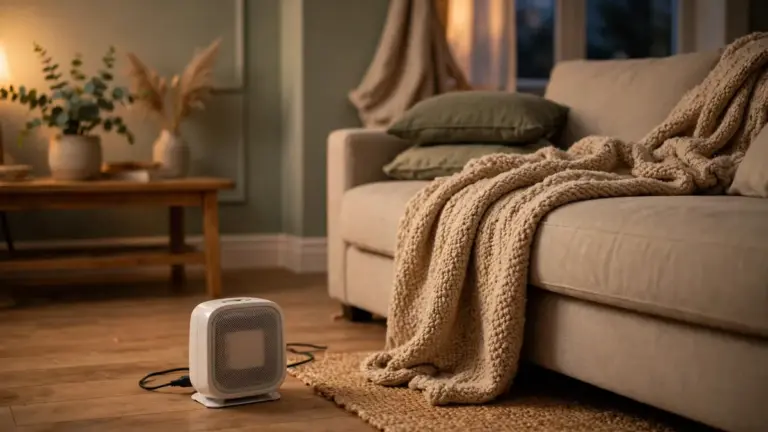
A space heater can warm a single room, but it is an expensive way to heat, because electricity costs more per unit of heat than gas or oil. Space heaters are also a fire risk if used improperly. They are a short-term solution for a cold room, not a substitute for fixing the underlying problem.
Will new windows fix the problem?
New windows can help, especially if your current windows are single-pane or damaged. But windows are expensive, and the payback period is long. Air sealing and insulation are usually more cost-effective. If your windows are in good condition, adding storm windows, window film, or heavy curtains can provide much of the benefit at a fraction of the cost.
Sources and further reading
- US Department of Energy: energy.gov: home heating, insulation, air sealing, and energy audits.
- ENERGY STAR: energystar.gov: energy-efficient heating, insulation guidance, and home improvement tips.
- US Environmental Protection Agency: epa.gov: indoor air quality, humidity, and healthy home guidance.
For more on how the systems in your house work, see how your home actually works, and for the hidden systems behind everyday life, the everyday systems that run your life. The money behind the fixes is covered in how money works in America, and our Home & Real Estate section covers more of it.
This article is for general educational and informational purposes only and is not financial, legal, insurance, tax, or medical advice. Always consult a qualified professional regarding your specific situation.