You pay for your car every month, insure it every six months, and when you travel, the price of the flight changes every time you check it. None of these prices are random, but none of them are simple either. Car insurance, car buying, flights, and hotels each run on their own pricing logic, and once you understand the logic, you can make better decisions and stop overpaying for the same thing your neighbor gets cheaper.
The short answer is this: cars and travel are priced by risk and demand. Insurers charge based on how likely you are to cost them money, and travel companies charge based on how much people want a seat or a room at that moment.
Key Takeaways
- Car insurance is risk pooling: your premium reflects how likely your group is to file claims, not just your own driving.
- Your premium can rise with a clean record, because repair costs, local claims, and medical costs all push rates up.
- Flight and hotel prices are dynamic: they change constantly based on demand, timing, and remaining inventory.
- Leasing is paying for a car’s depreciation during the time you use it. Buying is paying for the whole car.
- Travel insurance covers specific named risks, not disappointment. Read what is excluded, not just what is covered.
- The cheapest price is not always the lowest total cost: fees, insurance, and fuel change the real number.
Table of Contents
How car insurance actually works
Car insurance is risk pooling, the same idea as health insurance. Thousands of drivers pay premiums into a pool, and the pool pays for the accidents, thefts, and damage that some of them suffer. Your premium is the insurer’s estimate of how much you are likely to cost the pool, plus the company’s operating costs and profit.
The estimate is built from risk factors. Your driving record matters most: accidents and tickets signal higher risk. Your age matters: young drivers and very old drivers file more claims. Where you live matters: dense cities with more traffic and theft have higher rates than quiet rural areas. What you drive matters: expensive cars cost more to repair, and powerful cars are driven harder. How much you drive matters: more miles mean more exposure.
In most states, insurers also use a credit-based insurance score, a number derived from your credit history that predicts how likely you are to file a claim. Studies have found a correlation between credit behavior and claim frequency, though the practice is controversial, and a few states ban or restrict it. Where it is used, improving your credit can lower your premium over time.
Your premium is also shaped by choices you make: your deductible, the amount you pay out of pocket before insurance kicks in, and your coverage limits, the maximum the insurer will pay. A higher deductible means a lower premium, because you are taking on more of the risk yourself.
What car insurance covers
A standard auto policy is several coverages bundled together.
Liability coverage pays for damage and injuries you cause to other people. It is required in almost every state, and it is the most important coverage you carry, because a serious accident can produce claims far larger than the value of your car. Liability limits are usually written as three numbers, such as 100/300/100: $100,000 per injured person, $300,000 per accident, and $100,000 for property damage. State minimums are often much lower than this, and they are rarely enough for a serious crash.
Collision coverage pays to repair or replace your car if you hit something, another car, a tree, a guardrail. Comprehensive coverage pays for non-collision damage: theft, vandalism, hail, fire, a deer through the windshield. Both are usually optional unless you have a car loan or lease, in which case the lender requires them.
Uninsured and underinsured motorist coverage protects you if the other driver has no insurance or too little of it. Personal injury protection, or PIP, covers medical expenses for you and your passengers regardless of who caused the accident, and it is required in no-fault states.
Roadside assistance and rental reimbursement are optional add-ons. They are cheap, and they matter most on the worst day, when your car is undrivable and you need a tow and a replacement.
Why your premium goes up with a clean record
It feels unfair: no accidents, no tickets, and the renewal bill is higher anyway. There are real reasons, and none of them are personal.
Repair costs rise every year. Modern cars are full of sensors, cameras, and advanced driver assistance systems built into bumpers, windshields, and mirrors. A minor fender bender that once cost a few hundred dollars to fix can now cost several thousand, because the bumper contains radar and the windshield houses a camera that must be recalibrated.
Medical costs rise too, and injury claims are the most expensive part of car insurance. When hospital bills and treatment costs go up, insurers pay more per claim, and premiums follow.
Your area matters as well. If claims rise in your ZIP code, through more accidents, more theft, or more severe weather, rates rise for everyone there. Insurers price by territory, and your territory can get more expensive even if you personally drive perfectly.
Finally, the insurance market runs in cycles. When insurers lose money on claims, they raise rates across the board to restore profitability. When competition is fierce, rates soften. Your renewal price reflects the market as much as it reflects you.
The practical response is to shop around at every renewal. Insurers weigh risk factors differently, so the cheapest company for your neighbor may not be the cheapest for you, and loyalty is rarely rewarded with the best price.
How car prices work
A new car’s sticker price, the MSRP, is the manufacturer’s suggested retail price. It is a starting point for negotiation, not a fixed price. Below it is the invoice price, roughly what the dealer paid the manufacturer, though the true dealer cost is lower still because of holdback, a percentage the manufacturer returns to the dealer after the sale, and various incentives.
Dealers make money in several ways: the difference between the selling price and their true cost, financing (the interest rate markup on your loan), add-ons like extended warranties and paint protection, and service. The advertised price is only one part of the deal, which is why comparing the out-the-door price, including taxes, fees, and add-ons, is the only fair comparison.
Used car prices follow supply and demand more directly. A model’s value depends on its age, mileage, condition, and how many similar cars are for sale. Vehicle history reports show accidents, title issues, and service records, and they are worth the cost before buying any used car. A pre-purchase inspection by an independent mechanic is worth even more.
Timing matters. New models arrive in the fall, and dealers discount the outgoing model year to clear space. End-of-month and end-of-quarter sales targets can make dealers more willing to negotiate. None of this guarantees a deal, but it shifts the odds.
Leasing versus buying
Leasing and buying answer different questions. Buying means paying for the whole car, keeping it as long as you want, and owning whatever value is left when you sell it. Leasing means paying for the car’s depreciation during the lease term, usually two to four years, plus interest and fees, and returning the car at the end.
A lease payment is lower than a loan payment for the same car, because you are only paying for part of the car’s value. But you build no equity, you face mileage limits (typically 10,000 to 12,000 miles a year, with penalties for going over), and you pay for excess wear and tear at return. Leasing suits people who want a new car every few years, drive predictable miles, and do not mind perpetual payments. Buying suits people who keep cars for a long time, drive a lot, or want to own an asset outright.
Gap insurance matters for both, but especially for financed purchases. A new car loses value quickly, and if it is totaled early in the loan, the insurance payout may be less than the remaining loan balance. Gap insurance covers that difference. Some leases include it. For a purchase, it is a cheap add-on that prevents a painful surprise.
The math that decides the question is total cost over the years you will use the car, including payments, insurance, maintenance, fuel, and resale value, not the monthly payment alone. A low monthly payment on a long loan often costs more overall than a higher payment on a shorter one.
How flights are priced
Airline pricing is dynamic, which means the price of a seat changes constantly based on demand, timing, competition, and remaining inventory. There is no single price for a flight. There are many fare classes for the same cabin, each with its own price and rules, and the cheapest classes sell out first.
The main factors are how far ahead you book, how many seats are left, whether the route has competition, and the day and time of travel. Flights on Friday evenings and Sunday afternoons cost more because demand is higher. Tuesday and Wednesday flights are often cheaper. Holiday periods cost more because everyone wants to travel at once.

Airlines use sophisticated revenue management systems that adjust prices in real time. If a flight is selling fast, prices rise. If it is selling slowly, prices may fall, though they rarely fall below a floor. Checking the same flight repeatedly does not raise the price, despite the popular belief. The price changes because inventory and demand change, not because the airline is watching you. Clearing cookies will not lower a fare.
The practical advice is consistent: book domestic flights a few weeks to a few months ahead, compare across airlines and dates, and be flexible about departure times if you can. Nonstop flights cost more than connections, and the premium is the price of your time.
How hotels are priced
Hotels use the same dynamic pricing logic as airlines. The rate for a room depends on demand, the season, local events, how far ahead you book, and how many rooms are left. A hotel in a city hosting a major convention charges far more that week than the week before, for the same room.
The advertised rate is often not the total. Resort fees, destination fees, parking, and taxes can add a large amount to the bill, and these fees are sometimes disclosed only at checkout. Comparing the total cost, not the nightly rate, is the only honest comparison.
Booking directly with the hotel sometimes gets a better rate or better terms than a third-party site, because the hotel avoids paying a commission. Loyalty programs add another layer: members often get the lowest advertised rate plus perks like free Wi-Fi or late checkout. Third-party sites are useful for comparing options, but the final booking is often better made direct.
Cancellation terms matter as much as price. A nonrefundable rate is cheaper, but it is a bet that your plans will not change. A refundable rate costs more and buys flexibility. The right choice depends on how certain your plans are.
Travel insurance: what it covers and what it never covers
Travel insurance is a bundle of coverages for specific named risks: trip cancellation, trip interruption, emergency medical care, medical evacuation, lost luggage, and travel delays. Each coverage has its own limits and exclusions, and the exclusions matter more than the coverage list.
Trip cancellation typically covers canceling for a listed reason: illness, injury, a death in the family, jury duty, a natural disaster at the destination. It does not cover changing your mind, a work conflict, or fear of travel, unless you buy a cancel-for-any-reason upgrade, which costs more and usually reimburses only part of the trip cost.
Emergency medical coverage matters most abroad, where your domestic health insurance may not cover you. Medical evacuation coverage pays to transport you to adequate care, which can cost tens of thousands of dollars without it. For international travel, these two coverages are the most important part of the policy.
What travel insurance never covers is as important as what it does. Pre-existing medical conditions are often excluded unless you buy the policy within a short window after your first trip payment. High-risk activities like skiing or scuba diving may need a rider. Pandemics, civil unrest, and known events are commonly excluded. The policy document, not the marketing summary, is the real contract.
Some credit cards include travel protections as a benefit, including trip cancellation, delay reimbursement, and rental car coverage, when you pay for the trip with the card. These benefits vary by card and are worth checking before buying a separate policy, because you may already be covered.
Rental cars: the real cost
The daily rate on a rental car is the smallest part of the story. Taxes, airport surcharges, and facility fees can add 30 percent or more to the bill. Renting from an off-airport location often avoids the airport fees, though it costs time to get there.
Insurance is the biggest question. Your personal auto policy often extends liability and collision coverage to a rental car, and many credit cards offer secondary collision coverage when you pay with the card. The rental company’s own insurance, sold at the counter, is expensive and often duplicates coverage you already have. Checking your own policy and your card’s benefits before you travel can save the daily insurance charge, which is sometimes as much as the rental itself.
Fuel is the other trap. Prepaying for a full tank is convenient but rarely the best deal, because you pay for fuel you do not use. Returning the car with a full tank, filled at a nearby station, is almost always cheaper. Tolls are the last surprise: rental cars with toll transponders charge convenience fees on top of the toll itself, and those fees add up fast.
Electric vehicles versus gas cars: the cost math
The cost comparison between an electric vehicle and a gas car has three parts: purchase price, fuel or charging, and maintenance.
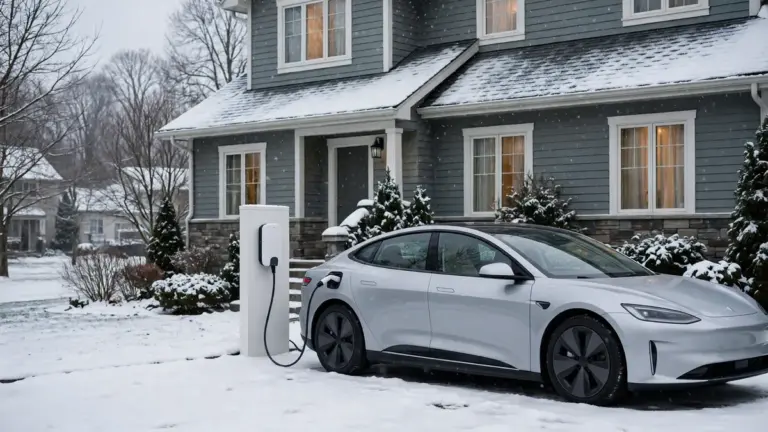
Electric vehicles typically cost more to buy than comparable gas cars, though the gap is narrowing, and tax incentives can reduce it further. Charging at home is usually much cheaper per mile than gasoline, while public fast charging costs more, sometimes approaching gas prices. The cheapest EV owner is one who charges at home overnight.
Maintenance is where EVs have a clear edge. An electric motor has far fewer moving parts than a gas engine: no oil changes, no spark plugs, no exhaust system, no transmission fluid. Brakes last longer too, because regenerative braking does much of the stopping. Tires wear faster on EVs, because the cars are heavier, which offsets some of the savings.
The battery is the big question. EV batteries degrade slowly over time, losing a small percentage of capacity each year, and replacing one is expensive. Most manufacturers warranty the battery for eight years or 100,000 miles, and real-world data suggests most batteries outlast the car. Cold weather reduces range temporarily, because batteries are less efficient when cold and heating the cabin draws power, but the range returns when the weather warms.
The honest answer to “is an EV cheaper” is that it depends on how much you drive, whether you can charge at home, and how long you keep the car. High-mileage drivers who charge at home save the most.
Common myths about cars and travel
Myth: Red cars cost more to insure. They do not. Insurers care about the car’s value, repair costs, and claims history for that model, not its color. The myth persists because red cars are associated with speeding, but the color itself is not a rating factor.
Myth: The cheapest flight is always the best deal. A cheap fare with a long layover, a checked bag fee, and no seat selection can cost more in time and money than a slightly more expensive nonstop. The total trip cost, including bags, food, and your time, is the real comparison.
Myth: You should always decline rental car insurance. Usually, yes, if your own policy or credit card covers you. But if you have no auto insurance, or your card’s coverage is secondary and weak, the rental company’s coverage may be worth it for a short trip. The answer depends on what you already have.
Myth: Premium gas is better for your car. If your car is designed for regular gas, premium fuel provides no benefit. It has a higher octane rating, which prevents knocking in high-compression engines, but in an engine designed for regular, it is simply more expensive fuel doing the same job.
Myth: Booking flights on a Tuesday saves money. The idea comes from a real pattern, airlines often release sales early in the week, but there is no magic day. Prices change constantly, and the best strategy is to compare across days and book when the price is acceptable, not to wait for a specific weekday.
Frequently asked questions
How much car insurance do I actually need? More than the state minimum in almost every case. Liability limits of at least 100/300/100 are a common recommendation, and higher if you have significant assets to protect. An umbrella policy, which adds a large layer of liability coverage above your auto and home policies, is inexpensive and worth considering.
Should I buy travel insurance for a domestic trip? It depends on what you would lose if the trip were canceled. If your flights and hotels are refundable, you may not need it. If you have large nonrefundable costs, or you are traveling somewhere remote, the medical and evacuation coverage alone can justify it.
Is it cheaper to fly or drive? For one person over a long distance, flying is usually cheaper once you count fuel, tolls, food, and your time. For a family, driving often wins, because the car costs the same whether it holds one person or four, while each plane ticket is priced separately.
Why do two people pay different prices for the same flight? Because they bought at different times, in different fare classes, or through different channels. The seat is the same. The price reflects when it was purchased and what is included, not the seat itself.
Does my auto insurance cover a rental car abroad? Usually not. Most US auto policies cover rentals only in the US and Canada, and many exclude Mexico. For international rentals, check your credit card’s coverage and consider the rental company’s insurance, because an accident abroad without coverage is expensive.
Related reading
- Holiday Travel Insurance: What It Covers and What It Never Covers
- Flight Delayed or Cancelled? Your Rights in Plain English
- Why Your EV Loses Range in Winter (and How Much)
- Why Does Car Insurance Cost More in Winter?
- Why Does Your Car Battery Die in Winter?
- How Do Snow Tires Actually Work?
- What Should You Keep in Your Car for a Winter Emergency?
- Why Does Gas Cost More at Some Stations Than Others?
- How Does an Electric Car Charge in the Cold?
- When Should You Really Change Your Oil?
- Why Do New Cars Cost So Much More Than They Used To?
- What Does Your Car Insurance Actually Cover?
- How Do Toll Roads Decide What to Charge?
- Why Do Tires Lose Air in Cold Weather?
- How Does Cruise Control Work?
- What Does the Check Engine Light Mean?
- How Do Hybrid Cars Work?
- Why Do Windshields Crack in Winter?
- What Does a Catalytic Converter Do?
- What Determines a Car’s Resale Value?
- What to Do After a Car Accident
- Why Does My Car Pull to One Side?
- How Does a Car Transmission Work?
- Why Do Brakes Squeak?
- How Does Power Steering Work?
- Why Does My Car Shake at High Speed?
- What Does Octane Mean?
- How Do Airbags Work?
- Why Do Tires Have Treads?
- How Does a Car Battery Work?
- Why Do Windshield Wipers Streak?
Sources and further reading
- National Highway Traffic Safety Administration: nhtsa.gov: vehicle safety ratings, recalls, and crash data.
- National Association of Insurance Commissioners: naic.org: how insurance is regulated and how to compare insurers.
- US Department of Transportation: transportation.gov: air travel rights, complaints, and consumer protections.
- Federal Trade Commission: consumer.ftc.gov: car buying, rental, and travel scam guidance.
- US Department of Energy: energy.gov: fuel economy, electric vehicles, and charging information.
- Insurance Information Institute: iii.org: plain-language explanations of how insurance works.
For more on the road and the skies, see our Auto & Travel section, and for the money behind it all, how money works in America. The pricing systems run on technology, so how the internet and your devices work is worth a read too, and for the bigger picture, the everyday systems that run your life.
This article is for general educational and informational purposes only and is not financial, legal, insurance, tax, or medical advice. Always consult a qualified professional regarding your specific situation.