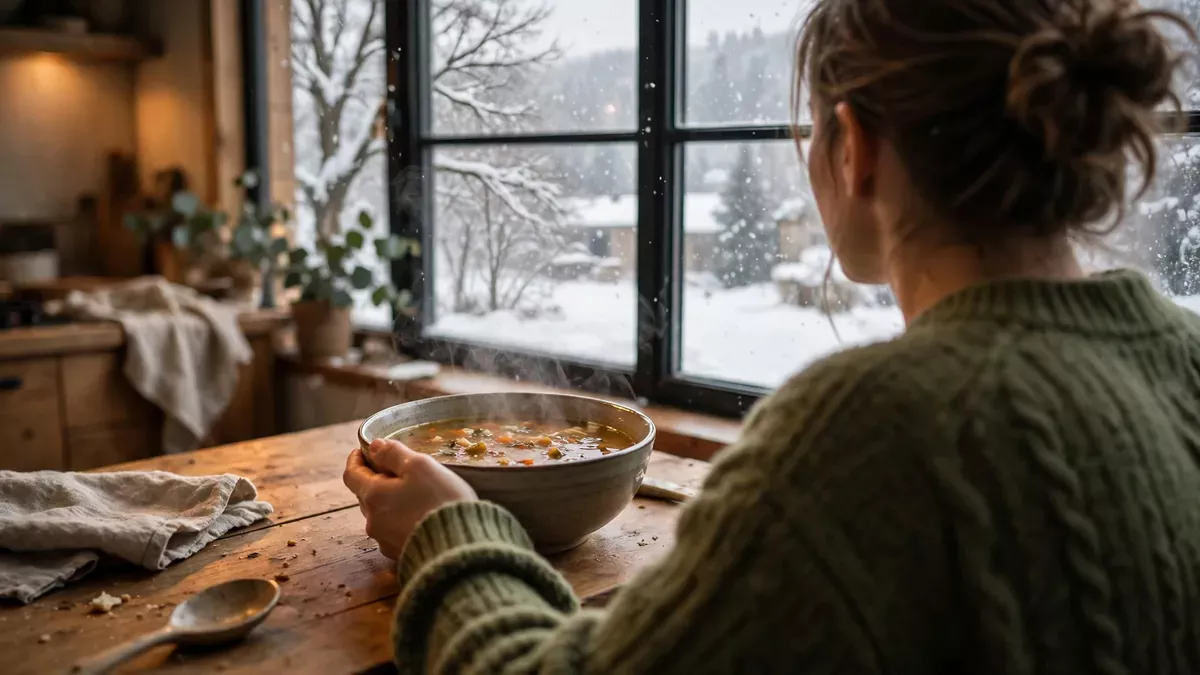
It is January. The days are short, the air is cold, and the salad you ate happily in July holds no appeal at all. What you want is soup. Stew. Macaroni and cheese. Something warm, rich, and familiar. The craving is not a failure of willpower. It is a predictable response to the season, driven by biology, psychology, and habit.
The short answer is this: winter cravings for comfort food are driven by a combination of cold, darkness, and memory. Cold weather increases the appeal of warm, calorie-dense food. Short days and reduced sunlight affect mood and appetite. Holiday traditions and childhood memories link certain foods to comfort and safety. The result is a seasonal appetite that is normal, common, and manageable.
Key Takeaways
- Comfort food cravings in winter are normal and common, driven by cold, darkness, habit, and memory.
- The body does not need significantly more calories in winter, because modern life keeps us warm indoors.
- Carbohydrates can temporarily boost serotonin, a brain chemical linked to mood, which is part of why starchy comfort foods feel soothing.
- Seasonal affective disorder, a form of depression linked to the seasons, can increase appetite for carbohydrates.
- Comfort foods are often tied to memory: the foods we crave are the foods that made us feel safe as children.
- The goal is not to eliminate comfort food, but to enjoy it mindfully and to balance it with other choices.
Table of Contents
The biology: cold, calories, and serotonin
The body is a thermostat. It maintains a core temperature of about 98.6 degrees Fahrenheit, and it spends energy to do so. In cold weather, the body works harder to stay warm, which might suggest that it needs more calories. In practice, the effect is small for most people, because modern life keeps us warm: we live in heated homes, wear warm clothing, and spend most of our time indoors. The extra calories the body burns to stay warm in winter are modest, not enough to justify a large increase in food intake.
The craving for warm, calorie-dense food is not primarily about energy needs. It is about comfort. Warm food raises the temperature of the stomach and the core, which feels good when you are cold. Rich food, high in fat and carbohydrates, provides a sense of fullness and satisfaction that light food does not. The body associates warmth and richness with safety and comfort, and it seeks them when the environment feels harsh.
There is also a brain chemistry component. Carbohydrates increase the availability of tryptophan, an amino acid that the brain uses to produce serotonin, a neurotransmitter linked to mood, calm, and well-being. Eating a carbohydrate-rich meal can temporarily boost serotonin levels, producing a mild calming effect. The effect is real but modest, and it is short-lived. It is not a treatment for depression, and it does not justify overeating. But it helps explain why a bowl of pasta or a slice of bread feels soothing on a cold, dark day.
Fat also plays a role. Fatty foods trigger the release of dopamine, a neurotransmitter linked to pleasure and reward. The combination of carbohydrates and fat, which is the defining feature of most comfort foods, activates both the serotonin and dopamine systems, producing a sense of satisfaction that is greater than either nutrient alone.
The darkness: light, mood, and appetite
Winter is dark. In the northern United States, the shortest days of the year have fewer than 10 hours of daylight, and the sun is low in the sky, providing less light even during the day. Many people commute in darkness, work indoors, and return home in darkness, spending the entire day with minimal sunlight exposure.
Reduced sunlight affects mood. Light regulates the body’s circadian rhythm, the internal clock that governs sleep, wakefulness, and hormone production. When light exposure decreases, the body’s production of melatonin, a hormone that promotes sleep, increases, and its production of serotonin decreases. The result can be fatigue, low mood, and increased appetite, particularly for carbohydrates.
For some people, the seasonal change in mood is more severe. Seasonal affective disorder, or SAD, is a form of depression that follows a seasonal pattern, typically beginning in the fall and lasting through the winter. The symptoms include low mood, fatigue, difficulty concentrating, oversleeping, and increased appetite, especially for starchy and sweet foods. SAD is more common in northern latitudes, where the winter days are shortest, and it affects women more than men.
SAD is a real medical condition, not just the winter blues. If you experience persistent low mood, loss of interest in activities you usually enjoy, or significant changes in sleep or appetite during the winter months, talk to a doctor. Treatment options include light therapy, psychotherapy, and medication. This article is educational, not medical advice, and it is not a substitute for professional evaluation.
Even for people who do not have SAD, the winter darkness can affect appetite. The reduced light, the cold, and the shorter days create a sense of deprivation, and food is one of the most accessible sources of comfort. The craving for comfort food is, in part, a craving for light and warmth, expressed through the medium of food.
The memory: why comfort food is personal
Comfort food is personal. The foods we crave are not random. They are the foods that made us feel safe, loved, and cared for, usually in childhood.
For one person, comfort food is chicken soup, because their mother made it when they were sick. For another, it is macaroni and cheese, because it was the first meal they learned to cook. For another, it is a specific dish from their cultural heritage, a stew, a dumpling, a bread, that connects them to family and tradition. The food itself matters less than the memory it carries.
The association between food and comfort is formed early. When a child is upset, a parent offers food. When a family celebrates, they eat together. When a person is ill, they are brought soup and tea. Over time, the brain learns to associate certain foods with safety, love, and care. In adulthood, when we feel stressed, cold, or lonely, we crave those foods, because they promise the comfort they once delivered.
The association is powerful because it is emotional, not rational. You do not crave chicken soup because it is nutritionally optimal. You crave it because it tastes like being cared for. Understanding the emotional component of comfort food is the first step to managing it. The craving is not a character flaw. It is a memory.
The habit: winter routines and holiday traditions
Winter is a season of routines that reinforce comfort food cravings.
The holiday season, from Thanksgiving through New Year’s, is centered on food. Large meals, rich dishes, desserts, and alcohol are part of the celebration. The habits formed during the holidays can persist into January and February, because the body and the brain have become accustomed to richer food.
Cold weather also changes daily routines. People spend more time indoors, where food is readily available. They cook more, because it is too cold to go out. They bake, because the oven warms the kitchen. They eat heavier meals, because the body craves warmth. The routines of winter are routines of eating.
The routines are reinforced by the food environment. Grocery stores stock seasonal comfort foods in winter: soups, stews, baking supplies, hot chocolate, hearty breads. Restaurants offer winter menus with rich, warming dishes. The environment nudges you toward comfort food at every turn.
Breaking the habit does not require eliminating comfort food. It requires awareness. When you crave comfort food, ask yourself what you are actually craving: warmth, comfort, company, rest. Sometimes the answer is food, and that is fine. Sometimes the answer is a blanket, a conversation, a walk, or an early night. The craving is information, not a command.
How to enjoy comfort food without overdoing it
Comfort food is not the enemy. The goal is not to eliminate it, but to enjoy it in a way that feels good, both in the moment and afterward.
Start with the food itself. Many comfort foods can be made in lighter versions without losing their essence. A soup made with beans and vegetables is as warming as a soup made with cream and butter. A stew made with lean meat and plenty of vegetables is as satisfying as one made with fatty cuts. The warmth and the familiarity are what matter, not the calorie count.
Pay attention to portion size. A bowl of macaroni and cheese is comforting. A second bowl is not twice as comforting. Eating slowly, savoring the food, and stopping when you are full preserves the pleasure without the discomfort that follows overeating.
Balance the meal. If you are having a rich main dish, pair it with a salad or a vegetable side. The contrast makes the meal more satisfying, and it ensures that you are getting a variety of nutrients.
Cook at home when you can. Home-cooked comfort food is usually healthier than restaurant or takeout versions, because you control the ingredients, the portion size, and the amount of salt, fat, and sugar. Cooking is also a comforting activity in itself: the warmth of the kitchen, the smell of food, the rhythm of preparation.
Do not use food as the only source of comfort. If you are cold, put on a sweater. If you are lonely, call a friend. If you are tired, go to bed early. If you are stressed, take a walk. Food is one source of comfort, not the only one. Expanding your comfort repertoire reduces the pressure on food to meet every need.
Frequently asked questions
Is it normal to gain weight in winter?
Many people gain a small amount of weight in winter, typically one to two pounds, due to a combination of reduced activity, richer food, and holiday eating. The gain is usually modest, and it often reverses in the spring, when activity increases and the appetite for heavy food decreases. If you are concerned about weight gain, focus on maintaining your activity level and your usual eating patterns, rather than dieting in winter.
Why do I crave sugar in winter?
Sugar cravings in winter are linked to the same factors as other comfort food cravings: reduced sunlight, lower serotonin, and the desire for quick energy and pleasure. Sugar provides a rapid, short-lived boost in mood and energy, which feels appealing when you are tired and cold. The effect is temporary, and it is often followed by a crash. Eating a balanced meal with protein, fiber, and complex carbohydrates provides more sustained energy.
Does the body really need more calories in winter?
For most people living in heated homes and working indoors, the extra calorie need in winter is small. People who work outdoors in cold weather, or who spend extended time in the cold, do burn more calories. But for the average person, the winter appetite is driven more by comfort, habit, and mood than by energy needs.
Are there healthy comfort foods?
Yes. Many traditional comfort foods are naturally healthy: vegetable soup, bean stew, oatmeal, roasted sweet potatoes, baked apples. The warmth, the familiarity, and the satisfaction are what make a food comforting, not the fat or sugar content. A bowl of lentil soup can be as comforting as a bowl of macaroni and cheese, and it leaves you feeling better afterward.
When should I talk to a doctor about winter mood and appetite changes?
If you experience persistent sadness, loss of interest in activities, fatigue, difficulty sleeping or oversleeping, or significant changes in appetite that last for more than two weeks, talk to a doctor. These can be symptoms of seasonal affective disorder or another form of depression. A doctor can evaluate your symptoms and discuss treatment options. You do not need to wait until the symptoms are severe to seek help.
Sources and further reading
- National Institutes of Health: nih.gov: research on appetite, mood, serotonin, and seasonal changes in health.
- Academy of Nutrition and Dietetics: eatright.org: nutrition guidance, healthy eating patterns, and comfort food ideas.
- Centers for Disease Control and Prevention: cdc.gov: healthy eating, physical activity, and winter wellness.
For more on how the health care system works, see how American health care and your body work, and for the winter illness season, why you get sick more in winter. The hidden systems behind everyday life are covered in the everyday systems that run your life, and our Health & Longevity section covers more of it.
This article is for general educational and informational purposes only and is not financial, legal, insurance, tax, or medical advice. Always consult a qualified professional regarding your specific situation.