It is 2 AM. The house is dark and quiet. Then you hear it: a sharp crack from the ceiling, a slow groan from the floorboards, a faint ticking from inside the walls. Your heart beats a little faster. Is someone in the house? Is the roof about to collapse?
Almost certainly not. The sounds are your house itself, responding to the cooling night air, the settling of its frame, and the contraction of its materials. Houses are not silent, rigid structures. They are dynamic systems that expand, contract, shift, and settle, and they make noise as they do. Understanding why can turn a frightening midnight sound into a reassuring sign that your house is behaving normally.
The short answer is this: your house creaks at night primarily because of thermal expansion and contraction. As temperatures drop in the evening, the wood, metal, and other materials in your home contract. Floorboards shrink, pipes cool, ductwork tightens, and the wooden frame shifts slightly. These movements cause creaks, pops, and groans as materials rub against each other. You hear them at night because the house is quiet, the temperature change is greatest, and you are lying still, attuned to every sound.
Key Takeaways
- Thermal expansion and contraction is the main cause of nighttime house noises. Materials expand when warm and contract when cool. The evening temperature drop causes the most rapid contraction, producing creaks and pops.
- Wood is particularly noisy because it expands and contracts with both temperature and humidity. As humidity drops at night, wood shrinks, causing floorboards to pull apart slightly and creak.
- Houses settle over time as the soil beneath the foundation compresses. Settling is most pronounced in the first few years after construction but can continue for decades, causing small shifts that produce creaks.
- Pipes and ductwork also make noise. Water pipes expand when hot water flows and contract as they cool. Metal air ducts pop and bang as heated or cooled air flows through them.
- You hear house noises at night because the house is quiet (no TV, no conversation, no traffic), the temperature change is greatest, and you are lying still and attuned to sounds.
- Most house noises are normal and harmless. Loud banging, cracking, sticking doors or windows, large cracks in walls, or sloping floors may indicate a structural issue and warrant a professional inspection.
Table of Contents
Thermal expansion: the main culprit
Every material in your house expands when it warms up and contracts when it cools down. This is called thermal expansion, and it is a fundamental property of matter. The amount of expansion depends on the material and the temperature change.
Wood expands and contracts significantly with temperature, but it is even more sensitive to humidity. Wood is hygroscopic, meaning it absorbs moisture from the air when it is humid and releases moisture when it is dry. As wood absorbs moisture, it swells. As it dries, it shrinks. The combination of temperature and humidity changes causes wood to move constantly, expanding during warm, humid days and contracting during cool, dry nights.
Your house contains an enormous amount of wood: the framing (studs, joists, beams), the subfloor, the floorboards, the trim, the doors, and the cabinets. When this wood contracts at night, it shifts in its joints, rubs against nails and screws, and pulls away from adjacent pieces. Each movement can produce a sound: a creak as a floorboard rubs against a joist, a pop as a stud shifts in its pocket, a groan as a beam settles under load.
Metal also expands and contracts with temperature, and it does so more predictably than wood. Steel expands about 12 parts per million per degree Fahrenheit, which means a 10-foot steel beam will expand by about 1/8 inch when the temperature rises by 80 degrees Fahrenheit. This may not sound like much, but in a tightly fitted structure, 1/8 inch of movement is enough to cause a loud pop or bang.
The metal in your house includes nails, screws, brackets, ductwork, pipes, and flashing. As these metal components contract at night, they can shift, rub, and pop. Ductwork is particularly noisy: thin sheet metal ducts expand when hot air flows through them and contract when the furnace cycles off, producing a distinctive popping or banging sound that many homeowners recognize.
Plastic pipes (PVC, PEX) also expand and contract, though less than metal. PEX (cross-linked polyethylene) is flexible and can absorb some movement, but it can still creak as it rubs against framing or hangers.
Settling: your house is still moving
Your house is not sitting on solid, unchanging ground. It is sitting on soil, and soil moves. It compresses under the weight of the house, expands when wet, shrinks when dry, and shifts with freeze-thaw cycles. The house moves with it, and the movement produces sounds.
Settling is most pronounced in the first few years after construction, as the soil beneath the foundation compresses under the weight of the house. A new house may settle by 1/2 inch to 1 inch in its first year, with most of the settling occurring in the first two to three years. The settling is rarely uniform: one corner may settle more than another, causing the frame to rack slightly, doors to stick, and cracks to appear in drywall.
But settling does not stop after the first few years. It continues, more slowly, for the life of the house. Seasonal changes in soil moisture cause the ground to expand and contract, lifting and lowering the foundation by small amounts. In areas with expansive clay soil, the seasonal movement can be significant: the soil swells when wet and shrinks when dry, causing the foundation to heave and settle by an inch or more each year.
Each movement, however small, causes the wooden frame to shift. Nails loosen slightly, joints open and close, and the structure creaks as it adjusts to its new position. The sounds are most noticeable at night, when the house is quiet and the temperature is dropping, but settling occurs throughout the day.
Most settling is normal and harmless. However, excessive or differential settling (where one part of the house settles much more than another) can cause structural problems. Signs of problematic settling include large cracks in the foundation or walls (wider than 1/4 inch), doors and windows that stick or will not close, sloping floors, and gaps between walls and ceilings. If you notice these signs, have a structural engineer inspect your home.
Pipes, ducts, and other noisy systems
Your house contains several systems that make noise as they operate, and these noises are often more noticeable at night.
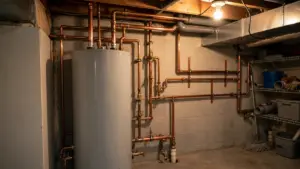
Water pipes are a common source of nighttime noise. When you run hot water (for a shower, a bath, or a dishwasher), the pipes expand. As the water cools and the pipes contract, they rub against the framing, hangers, or other pipes, producing ticking, creaking, or knocking sounds. The sounds can continue for 30 minutes or more after the hot water is turned off, as the pipes gradually cool to room temperature.
Copper pipes are noisier than PEX pipes, because copper expands more and is more rigid. PEX is flexible and can absorb some movement, but it can still make noise if it is tightly constrained. Insulating pipes with foam pipe insulation can reduce the noise by cushioning the pipes and slowing the temperature change.
Air ducts are another noisy system. When your furnace or air conditioner turns on, hot or cold air flows through the ducts, causing the thin sheet metal to expand or contract. The ducts pop, bang, and groan as they change shape. The noise is loudest when the system first turns on and the temperature change is most rapid. Loose ducts, ducts that are not properly supported, or ducts with inadequate expansion joints are noisier than well-installed ducts.
Your water heater can also make noise. As the water inside heats up, minerals in the water (calcium, magnesium) can precipitate and settle at the bottom of the tank, forming sediment. When the burner heats the water, steam bubbles form under the sediment and burst, producing a rumbling or popping sound. This is called kettling, and it is more common in areas with hard water. Flushing the water heater annually can reduce sediment buildup and noise.
Other systems that make noise at night include the refrigerator (the compressor cycling on and off, ice maker dropping ice), the sump pump (if you have a basement), and the attic fan (if it is thermostat-controlled and runs at night).
Why you hear it at night, and not during the day
House noises occur throughout the day, but you are much more likely to notice them at night. There are three reasons for this.
First, the temperature change is greatest in the evening and overnight. During the day, the sun warms your house, and the indoor temperature is relatively stable. In the evening, as the sun sets and the outdoor temperature drops, your house begins to cool. The indoor temperature may drop by 5 to 10 degrees Fahrenheit over the course of the evening, and the materials in your house contract in response. The contraction is most rapid in the first few hours after sunset, which is when you are likely to hear the most creaks and pops.
Second, the house is quieter at night. During the day, ambient noise from traffic, appliances, conversation, television, and music masks the subtle sounds of the house. At night, when these noise sources are absent, the house sounds become audible. A creak that is inaudible during the day, masked by the dishwasher and the television, is clearly audible at 2 AM when the house is silent.
Third, you are more attuned to sounds at night. When you are lying in bed, trying to fall asleep, your brain is in a heightened state of alertness for potential threats. Evolution has programmed humans to be vigilant at night, when predators were most active. A sudden sound in the dark triggers a startle response, even if the sound is harmless. During the day, when you are active and distracted, you are less likely to notice or be alarmed by the same sound.
The combination of greater temperature change, lower ambient noise, and heightened alertness makes nighttime the peak period for noticing house sounds. The sounds themselves are not necessarily louder at night; you are simply more likely to hear them.
When creaks mean trouble
Most house noises are normal and require no action. However, some sounds, or sounds accompanied by other symptoms, may indicate a problem that needs professional attention.
Loud banging or cracking sounds, especially if they are new or increasing in frequency, could indicate a structural issue, such as a failing beam, a cracked joist, or a foundation problem. A single loud crack is usually just thermal expansion, but repeated loud bangs warrant investigation.
Doors or windows that stick, will not close, or have gaps around the frame may indicate that the house is settling unevenly or that the frame is racking. If a door that used to close smoothly suddenly sticks, or if you notice new gaps around a window, have the house inspected.
Cracks in walls or ceilings are common, and most are harmless. Hairline cracks (less than 1/16 inch wide) in drywall are usually caused by normal settling and temperature changes. However, large cracks (wider than 1/4 inch), diagonal cracks, cracks that grow over time, or cracks that appear suddenly should be evaluated by a structural engineer. Cracks in the foundation, especially horizontal cracks or cracks that allow water to enter, are more serious and require prompt attention.
Sloping or sagging floors may indicate a failing support beam, a rotted joist, or foundation settlement. If you notice that a floor slopes noticeably, or that furniture rocks on an uneven floor, have the structure inspected.
Water sounds, such as dripping, running, or gurgling, could indicate a leak. A leak inside a wall can cause significant damage if not addressed promptly, including mold growth, rot, and structural damage. If you hear water sounds when no fixtures are running, investigate immediately.
Animal sounds, such as scratching, scurrying, squeaking, or chirping inside walls or the attic, could indicate pests: mice, rats, squirrels, raccoons, bats, or birds. Pests can damage insulation, wiring, and wood, and they can carry diseases. If you suspect pests, contact a pest control professional.
If you are unsure whether a house noise is normal or a cause for concern, it is always better to have a professional inspect it. A home inspector can assess the overall condition of your house, and a structural engineer can evaluate specific concerns about the foundation or framing. The cost of an inspection is small compared with the cost of repairing a structural problem that goes undetected.
Frequently asked questions
Why does my house creak more in winter?
Winter brings larger temperature swings and lower humidity, both of which increase contraction. The outdoor temperature may drop by 30 to 40 degrees Fahrenheit overnight, causing rapid contraction of building materials. Indoor humidity also drops in winter, as cold outdoor air holds less moisture, causing wood to shrink more. The combination produces more frequent and louder creaks.
Can I stop my house from creaking?
You cannot eliminate house creaks entirely, because thermal expansion and settling are inevitable. However, you can reduce specific noises: sprinkle talcum powder or powdered graphite between squeaky floorboards to reduce friction; screw the subfloor to the joists from below to eliminate movement; insulate pipes to reduce expansion noise; secure loose ductwork; and maintain consistent indoor humidity (30 to 50 percent) with a humidifier in winter.
Is it normal for a new house to creak?
Yes. New houses creak more than older houses, because the wood is still drying out and the house is settling. New lumber has a higher moisture content than seasoned lumber, and as it dries over the first year or two, it shrinks, causing creaks, pops, and small cracks in drywall. The creaking typically decreases after the first two to three years, as the wood reaches equilibrium moisture content and the settling slows.
What is the difference between settling and a foundation problem?
Settling is the normal, gradual compression of soil under the weight of the house. It is uniform, slow, and produces minor symptoms (hairline cracks, slight door sticking). A foundation problem is excessive, differential, or ongoing movement that causes significant symptoms: large cracks, sticking doors and windows, sloping floors, and water intrusion. A structural engineer can distinguish between normal settling and a foundation problem.
Should I be worried if my house makes a loud bang in the middle of the night?
A single loud bang is usually caused by thermal expansion, such as a duct popping or a beam shifting. It is startling but harmless. However, if loud bangs occur frequently, are accompanied by other symptoms (cracks, sticking doors, sloping floors), or are new and increasing, have the house inspected to rule out a structural issue.
Sources and further reading
US Department of Energy: energy.gov: guidance on home energy efficiency, building materials, insulation, and how temperature and humidity affect your home.
US Department of Housing and Urban Development: hud.gov: resources on home maintenance, healthy homes, and when to seek professional help for structural issues.
USA.gov: usa.gov: information on home safety, maintenance, and finding licensed home inspectors and contractors.
For more on how your home works, see how your home actually works. Heating is covered in why is my house cold at 70 degrees, and the cloud that your smart home devices use is explained in what is the cloud. Our Home & Real Estate section covers more of it.
This article is for general educational and informational purposes only and is not financial, legal, insurance, tax, or medical advice. Always consult a qualified professional regarding your specific situation.