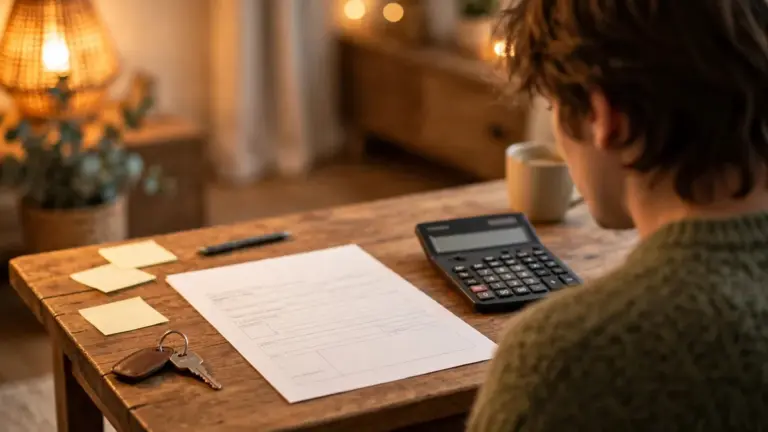
The heating bill arrives, and the number is higher than you expected. Much higher. You have not changed anything. The thermostat is set where it always is. The house is the same house. So why is the bill so high?
The short answer is this: a heating bill is the price of fuel multiplied by the amount of fuel you used. Either the price went up, or you used more, or both. The price is set by your utility and the energy market. The usage is driven by the weather, by how much heat your house loses, and by how efficiently your heating system replaces it. Most high bills are a combination of a cold month and a house that wastes heat.
Key Takeaways
- A heating bill equals the fuel price multiplied by the amount used. Check both numbers on your bill before assuming something is wrong.
- Colder weather means more heating degree days, which means more fuel use. A bill can spike simply because the month was colder than last year.
- The most common house problems are air leaks, poor insulation, duct leaks, and an old or inefficient furnace.
- A dirty filter, a failing thermostat, or a heat pump running on auxiliary heat can all drive up usage.
- A programmable thermostat setback of 7 to 10 degrees for 8 hours a day can save up to 10 percent on heating, according to the US Department of Energy.
- If you are struggling to pay, the federal LIHEAP program helps low-income households with heating bills.
Table of Contents
How a heating bill works
A heating bill has two main components: the rate and the usage.
The rate is the price you pay per unit of fuel. For natural gas, the unit is usually a therm. For electricity, it is a kilowatt-hour. For heating oil, it is a gallon. For propane, it is a gallon. The rate is set by your utility, and it can change from month to month, depending on the wholesale price of fuel, the utility’s costs, and regulatory decisions. Some utilities offer a fixed-rate plan, in which the rate is locked for a period. Others use a variable rate, which follows the market.
The usage is the amount of fuel you consumed during the billing period. It is measured by your meter, and it is listed on the bill. Usage depends on the weather, the size and condition of your house, the efficiency of your heating system, and your thermostat setting.
The bill also includes fixed charges: a customer charge, a delivery charge, taxes, and fees. These do not depend on usage, and they are usually a small part of the total. The variable part, rate times usage, is where the money goes.
When your bill is high, the first step is to look at the bill itself. Is the rate higher than last month, or higher than the same month last year? Is the usage higher? The answer tells you whether the problem is the price, the amount you used, or both.
The weather: heating degree days
The biggest single driver of heating usage is the weather. A colder month means more heating, and more heating means a higher bill. The relationship is not just intuitive. It is measurable.
Utilities and energy analysts use a metric called heating degree days, or HDD. A heating degree day is a measure of how cold a day was, relative to a baseline of 65 degrees Fahrenheit. If the average temperature for a day is 45 degrees, that day has 20 heating degree days (65 minus 45). If the average is 65 or above, the day has zero heating degree days.
The total heating degree days for a month tells you how much heating was needed. A month with 1,000 heating degree days required roughly twice as much heating as a month with 500. If your January bill is higher than your December bill, it may simply be because January was colder, with more heating degree days.
Many utility bills show the heating degree days for the billing period, or the average temperature. If yours does, compare the current period to the same period last year. If the heating degree days are higher, the usage should be higher too, and the bill is not a mystery. It is the weather.
The house: where the heat goes
If the weather does not explain the bill, the house does. A house loses heat in several ways, and each one increases the amount of fuel the heating system must burn.
Air leaks are the most common problem. Cold air enters through gaps around windows, doors, pipes, wires, and recessed lights. Warm air escapes through the attic. The heating system must replace the lost heat continuously. Air sealing, closing the gaps with caulk, weatherstripping, and foam, is often the most cost-effective improvement a homeowner can make.
Insulation is the second problem. If the attic has too little insulation, heat escapes through the ceiling. If the walls are uninsulated, heat escapes through the exterior walls. If the floor over an unheated crawl space or garage is uninsulated, heat escapes downward. The US Department of Energy recommends attic insulation levels that vary by climate, but in most of the northern United States, the target is R-38 to R-60.
Duct leaks are a third problem, and one that many homeowners do not know about. The ducts that carry heated air from the furnace to the rooms can leak at joints, seams, and connections. The Department of Energy estimates that duct losses can account for more than 25 percent of the energy used for heating in a typical home. The heated air escapes into the attic, the crawl space, or the walls, instead of reaching the rooms. Sealing ducts with mastic sealant or metal tape (not cloth duct tape, which degrades) can recover much of that lost heat.
Windows are a fourth problem, but they are often overestimated. A single-pane window loses more heat than a double-pane window, but the total heat loss through windows is usually less than the loss through air leaks and poor insulation. Replacing windows is expensive, and the payback period is long. Air sealing and insulation are usually better investments.
The heating system: efficiency and maintenance
The heating system itself can be the problem.
An old furnace or boiler may be inefficient. Furnace efficiency is measured by AFUE, Annual Fuel Utilization Efficiency, which is the percentage of the fuel’s energy that becomes heat. An old furnace might have an AFUE of 70 or 80 percent, meaning 20 to 30 percent of the fuel’s energy is wasted, going up the flue. A modern condensing furnace has an AFUE of 90 to 98 percent. The difference is significant: replacing an 80 percent furnace with a 95 percent furnace reduces fuel use by about 16 percent for the same amount of heat.
A dirty filter can also drive up the bill. The filter traps dust and particles, and when it is clogged, the furnace must work harder to push air through it. The reduced airflow can cause the furnace to overheat, cycle more frequently, and use more fuel. Changing the filter regularly, typically every one to three months during the heating season, is the simplest maintenance task a homeowner can do.
A heat pump can be a special case. A heat pump moves heat from the outside air into the house, rather than generating heat by burning fuel. It is efficient in mild cold, but as the outdoor temperature drops, the heat pump becomes less effective, and the system may switch to auxiliary electric resistance heat, which is much more expensive per unit of heat. If your heat pump is running on auxiliary heat for extended periods, your electric bill will spike. A heat pump that is undersized, or that has a faulty defrost cycle, or that is set to switch to auxiliary heat too early, can waste a great deal of electricity.
A thermostat problem can also cause high bills. A thermostat that is miscalibrated, or that is placed near a heat source or a draft, can cause the system to run longer than necessary. A programmable thermostat that is not programmed, or that is set to maintain a high temperature around the clock, will use more fuel than one that sets back the temperature when you are away or asleep.
What to check first
If your heating bill is unexpectedly high, work through the checks in order.
First, read the bill. Compare the rate and the usage to the same month last year, and to last month. If the rate is higher, the increase is a pricing issue, and there may be little you can do except shop for a better rate, if your state allows it, or enroll in a budget billing plan that spreads the cost evenly across the year.
If the usage is higher, check the weather. Was the month colder than the same month last year? If the bill shows heating degree days, compare them. If the weather explains the increase, the bill is not a sign of a problem.
If the weather does not explain it, check the house. Feel for drafts around windows and doors. Check the filter. Make sure that heating vents are open and unobstructed. Check that the thermostat is set correctly and that the program, if it has one, is running.
If the bill is much higher than usual, and none of the above explains it, check for a system problem. A furnace that is short-cycling (turning on and off frequently), making unusual noises, or producing less heat than usual may need a professional inspection. A sudden spike in usage can also indicate a fuel leak, though this is rare. If you smell gas, leave the house and call your utility or 911 immediately.
What actually lowers the bill
The most effective steps are the ones that reduce heat loss and improve efficiency.
Set the thermostat back when you are away or asleep. The Department of Energy suggests that lowering the thermostat by 7 to 10 degrees for 8 hours a day can save up to 10 percent on heating costs. A programmable or smart thermostat makes this automatic. The savings come from reducing the temperature difference between the inside and the outside, which slows heat loss.
Seal air leaks. Caulk around windows, weatherstrip doors, seal gaps around pipes and wires, and add foam gaskets behind outlet covers on exterior walls. The materials cost a few dollars, and the work can be done in an afternoon.
Add insulation, especially in the attic. If you can see the attic joists, you probably do not have enough. Blown-in insulation can be added by a professional, or by a homeowner with a rented machine.
Maintain the heating system. Change the filter regularly. Have the furnace or boiler serviced annually by a professional. A tune-up can catch problems early, improve efficiency, and extend the life of the equipment.
Seal the ducts. If your ducts run through an unheated attic or crawl space, sealing the joints and insulating the ducts can recover a significant amount of heat.
Use the sun. Open curtains on south-facing windows during the day to let in solar heat. Close them at night to insulate against the cold glass. The effect is modest, but it is free.
Consider a home energy audit. Many utilities offer audits for free or at low cost. An auditor will perform a blower door test, inspect the insulation and ducts, and provide a prioritized list of improvements, with estimated costs and savings.
Help paying the bill
If you are struggling to pay your heating bill, help is available.
The Low Income Home Energy Assistance Program, or LIHEAP, is a federal program that helps low-income households pay for heating and cooling. The program is administered by the states, and eligibility and benefit amounts vary. You can find information about your state’s program through the Department of Health and Human Services, or by calling 211, the national helpline for social services.
Many utilities offer their own assistance programs, including budget billing, which spreads the annual cost evenly across the year, and hardship funds for customers who are behind on payments. Contact your utility to ask what is available.
Some states have winter shutoff protections, which prevent utilities from disconnecting heating service during the coldest months, even if the bill is unpaid. The rules vary by state, and they do not forgive the debt, but they provide time to arrange payment.
Frequently asked questions
Why is my bill higher than my neighbor’s? Houses differ. Your neighbor’s house may be smaller, better insulated, or heated by a different fuel. Their thermostat setting, their schedule, and the number of people in the household all affect the bill. Comparing bills is only useful if the houses and the habits are similar.
Does turning the heat off when I leave save money? Turning the heat down, not off, saves money. If you turn the heat off entirely in freezing weather, the house can cool to the point where pipes freeze, which is a far more expensive problem than the heating bill. A setback of 7 to 10 degrees is safe and effective. If you will be away for an extended period in winter, set the thermostat to at least 55 degrees to protect the pipes.
Is it cheaper to heat with gas or electricity? It depends on the local prices and the efficiency of the equipment. Natural gas is usually cheaper per unit of heat than electricity, because gas furnaces are efficient and gas is relatively inexpensive. Electric resistance heat is the most expensive common heating method. Heat pumps, which move heat rather than generating it, can be cheaper than gas in mild climates, but more expensive in very cold climates, when they rely on auxiliary heat.
Why does my bill go up even when I keep the thermostat the same? The thermostat setting is only one factor. The weather, the fuel price, and the condition of the house all affect the bill. A colder month, a rate increase, or a new air leak can raise the bill even if the thermostat has not moved.
Should I close vents in unused rooms? Closing a few vents in unused rooms can save a small amount of energy, but closing too many can increase pressure in the duct system, causing leaks and reducing the efficiency of the furnace. If you close vents, leave at least 80 percent of them open, and do not close vents in rooms with plumbing, because the pipes can freeze.
Sources and further reading
- US Department of Energy: energy.gov: heating costs, energy audits, and how to reduce your bill.
- US Energy Information Administration: eia.gov: energy prices, heating fuel data, and regional trends.
- ENERGY STAR: energystar.gov: efficient heating equipment, programmable thermostats, and home energy tips.
For more on how the systems in your house work, see how your home actually works, and for why the house feels cold even when the thermostat is satisfied, why your house is cold at 70 degrees. The money behind the bill is covered in how money works in America, and our Home & Real Estate section covers more of it.
This article is for general educational and informational purposes only and is not financial, legal, insurance, tax, or medical advice. Always consult a qualified professional regarding your specific situation.