Gutters are easy to ignore. They hang quietly along your roofline, doing nothing visible, until the day they clog, sag, or fall off, and you discover how much damage uncontrolled rainwater can do. A single inch of rain on a 1,000-square-foot roof produces about 620 gallons of water. Without gutters, all of that water pours off the roof edge, splashes against your foundation, erodes the soil, seeps into your basement, and rots your siding.
Gutters are not decorative. They are a critical part of your home’s water management system, and they protect your foundation, your basement, your siding, your landscaping, and your roof itself. Understanding what they do, and what happens when they fail, can save you thousands of dollars in water damage.
The short answer is this: gutters collect rainwater from your roof and channel it through downspouts away from your house. Without gutters, rainwater falls directly from the roof edge, pooling around the foundation, eroding soil, seeping into the basement, staining siding, and rotting wood trim. Gutters prevent foundation cracks, basement flooding, soil erosion, siding damage, and ice dams. They need cleaning at least twice a year, and clogged gutters can cause as much damage as having no gutters at all.
Key Takeaways
- One inch of rain on a 1,000-square-foot roof produces about 620 gallons of water. Gutters collect this water and direct it away from your house through downspouts.
- Gutters protect your foundation by preventing water from pooling around it, which causes cracks, settling, and basement flooding. They also prevent soil erosion, siding damage, wood rot, and ice dams.
- The most common gutter type is K-style aluminum (5 or 6 inches wide), which lasts 20 to 30 years. Other materials include vinyl (10 to 20 years), steel (20 to 30 years), copper (50+ years), and zinc (50+ years).
- Clogged gutters cause water to overflow, run down siding, pool around the foundation, seep into the basement, rot fascia and soffits, and create mosquito breeding grounds. They also add weight that can pull gutters away from the house.
- Clean gutters at least twice a year (spring and fall), or more often if you have overhanging trees. Ensure downspouts extend 4 to 6 feet from the house.
- Gutter guards reduce cleaning frequency but do not eliminate maintenance. They cost $1,500 to $3,000 installed for a typical home and work best for leaves; small debris can still get through.
Table of Contents
What gutters actually do (the water math)
To understand why gutters matter, you need to understand how much water your roof collects.
A roof is a large catchment area. Every square foot of roof collects rainwater, and the total adds up quickly. One inch of rain on one square foot of roof produces about 0.62 gallons of water. Multiply that by your roof area, and the numbers are striking.
A 1,000-square-foot roof (a small to medium home) collects about 620 gallons of water from one inch of rain. A 2,000-square-foot roof collects about 1,240 gallons. A heavy rainstorm that drops 2 inches of rain delivers over 1,200 gallons to a small roof and nearly 2,500 gallons to a large roof.
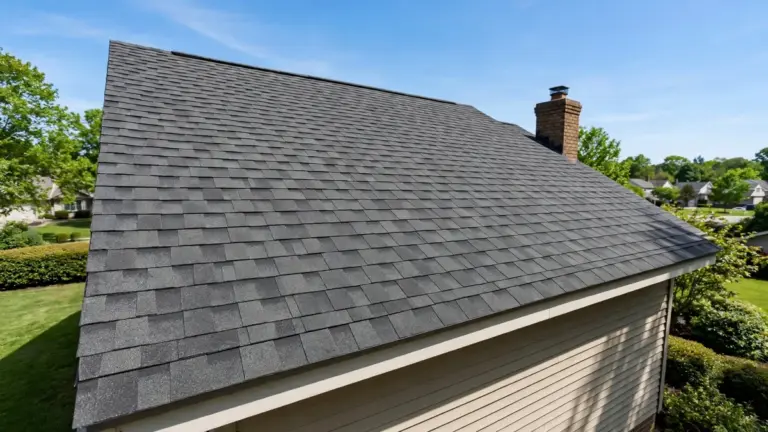
Without gutters, all of that water pours off the roof edge in a sheet, landing in a narrow band around the perimeter of your house. The water splashes against the foundation, erodes the soil, and pools in low spots. Over time, the repeated impact of water creates trenches in the soil, exposes the foundation, and directs water toward the basement.
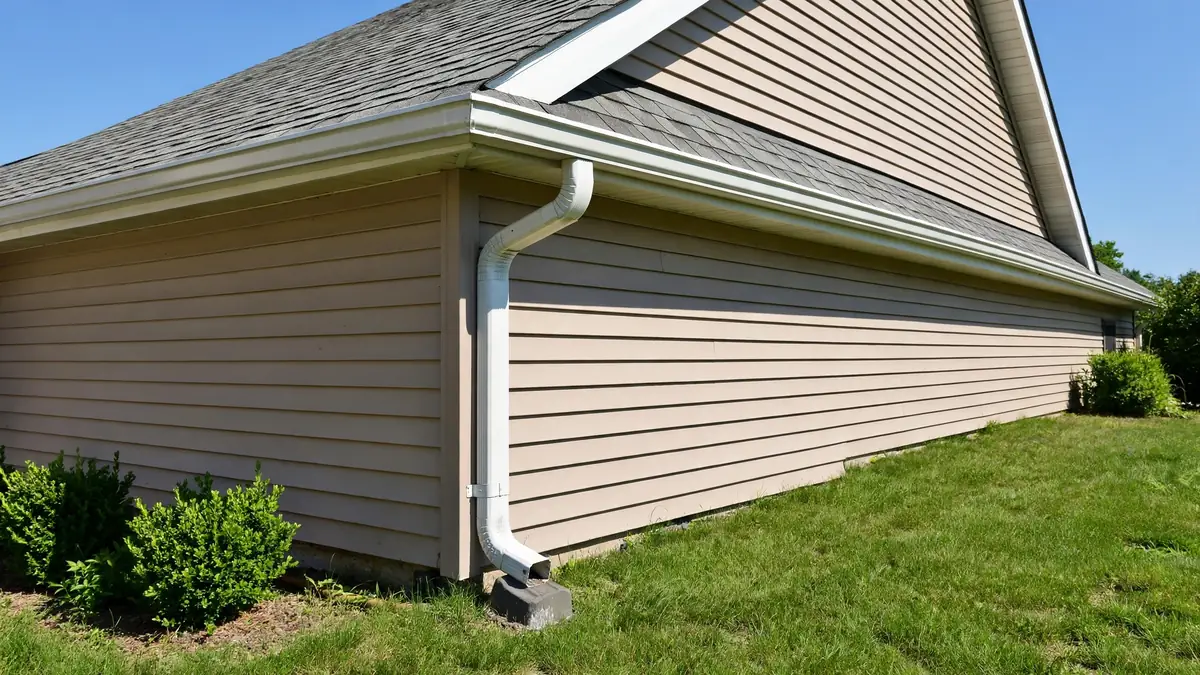
Gutters intercept this water. The gutter trough, mounted along the roof edge, catches rainwater as it runs off the roof. The water flows along the gutter (which is sloped slightly toward the downspouts, about 1/4 inch per 10 feet) and into downspouts, vertical pipes that carry the water to the ground. Downspouts should extend 4 to 6 feet from the house, discharging water onto a splash block, into a drain, or onto a sloped surface that directs water away from the foundation.
The system is simple, but it is effective. Properly functioning gutters keep the area around your foundation dry, which is essential for preventing the most expensive types of water damage.
The damage gutters prevent
Gutters protect your home in several ways, each of which can save you significant repair costs.
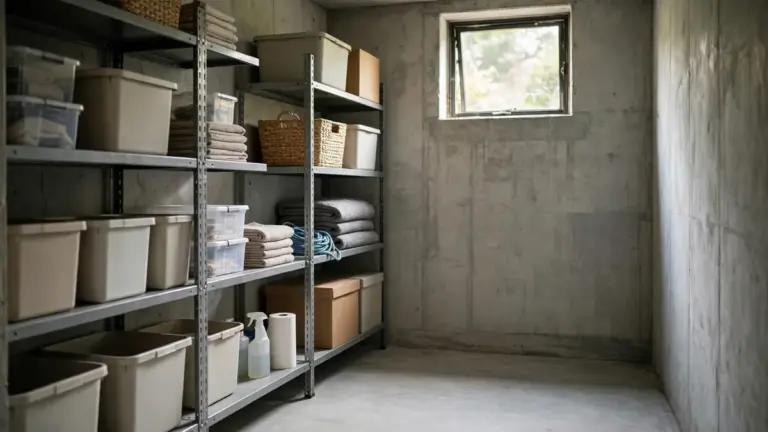
Foundation damage is the most serious risk. When water pools around the foundation, it seeps into the soil, which expands (in clay soils) or erodes, causing the foundation to crack, settle, or shift. Water can also enter the basement through foundation cracks, causing flooding, mold growth, and damage to stored items and finished basement spaces. Foundation repairs cost $2,000 to $10,000 or more, depending on the severity. Basement waterproofing costs $3,000 to $15,000. Gutters prevent much of this damage by keeping water away from the foundation.
Soil erosion is a gradual but destructive process. Without gutters, water falling from the roof creates trenches in the soil around your house, exposing the foundation and creating low spots where water pools. Erosion also washes away topsoil, mulch, and landscaping, and can undermine walkways, patios, and driveways. Over time, erosion changes the grading around your house, directing even more water toward the foundation.
Siding and wood rot occur when water splashes from the roof onto the exterior walls. Water staining on siding is cosmetic, but prolonged exposure causes wood siding and trim to rot, vinyl siding to warp, and paint to peel. Water can also enter through gaps around windows and doors, causing interior damage. Replacing rotted siding and trim costs $500 to $5,000 or more, depending on the extent.
Fascia and soffit damage occurs when gutters overflow or leak. The fascia is the vertical board behind the gutter; the soffit is the horizontal surface beneath the roof overhang. When gutters clog or leak, water backs up onto the fascia and soffit, causing wood rot. Rotted fascia cannot support the gutters, which may pull away from the house. Repairing fascia and soffits costs $500 to $2,000.
Ice dams in winter are exacerbated by clogged gutters. An ice dam forms when snow on the roof melts, runs down to the eaves, and refreezes, creating a dam of ice that prevents further meltwater from draining. Water backs up behind the dam, under the shingles, and into the house, causing leaks and damage. Clogged gutters contribute to ice dams by preventing meltwater from draining properly. Clean gutters, combined with proper attic insulation and ventilation, reduce the risk of ice dams.
Landscaping damage is a less expensive but still frustrating consequence. Water pouring off the roof washes away mulch, damages plants, erodes flower beds, and creates muddy areas around the house. Gutters protect your landscaping investment by directing water to a controlled discharge point.
Types and materials
Gutters come in several shapes and materials, each with advantages and disadvantages.
K-style gutters are the most common type in the US, named for their shape, which resembles the letter K when viewed in cross-section. They have a flat back (which mounts against the fascia) and a decorative front that resembles crown molding. K-style gutters are available in 5-inch and 6-inch widths. Five-inch gutters are standard for most homes; 6-inch gutters handle more water and are used for larger roofs, steeper pitches, or areas with heavy rainfall. K-style gutters hold more water than half-round gutters of the same width, because their shape provides more volume.
Half-round gutters are semicircular in cross-section, with a traditional, classic appearance. They are common on historic homes and in regions with a traditional architectural style. Half-round gutters are less prone to clogging than K-style gutters, because their smooth, curved shape allows debris to flow through more easily. However, they hold less water than K-style gutters of the same width, so they may need to be larger to handle the same roof area.
Box gutters are built into the roof structure, typically on commercial buildings and older homes with flat or low-slope roofs. They are rectangular troughs integrated into the roof edge, often lined with metal. Box gutters are less common on modern residential homes.
Aluminum is the most common gutter material. It is lightweight, rust-proof, available in many colors, and relatively inexpensive ($4 to $10 per linear foot installed). Aluminum gutters last 20 to 30 years. They can dent from ladders or falling branches, but they do not rust. Seamless aluminum gutters (formed on-site from a single piece of aluminum) have fewer joints, reducing the risk of leaks.
Vinyl (PVC) gutters are the cheapest option ($3 to $6 per linear foot) and the easiest to install, making them popular for DIY projects. However, vinyl is less durable than aluminum: it can crack in cold weather, warp in heat, and become brittle with age. Vinyl gutters last 10 to 20 years. They are available in limited colors (typically white and brown).
Steel gutters are strong and durable, lasting 20 to 30 years if galvanized (coated with zinc to prevent rust) or stainless steel. Galvanized steel gutters cost $6 to $12 per linear foot installed. They are heavier than aluminum and can rust if the galvanized coating is damaged. Stainless steel gutters are more expensive but do not rust.
Copper gutters are the premium option, costing $15 to $30 per linear foot installed. Copper is extremely durable (50+ years), develops a beautiful green patina over time, and does not rust or corrode. Copper gutters are often used on high-end homes and historic restorations. They require specialized installation (copper cannot be mixed with aluminum, as the metals react).
Zinc gutters are durable (50+ years), develop a protective patina, and cost $10 to $20 per linear foot. They are less common in the US than in Europe, where zinc roofing and gutters are traditional.
What happens when gutters fail
Gutters fail in several ways, and each failure mode causes different damage.
Clogging is the most common problem. Leaves, twigs, pine needles, seeds, and shingle granules accumulate in gutters, blocking water flow. When gutters clog, water overflows, running down the siding and pooling around the foundation. Clogged gutters also become heavy, sagging and pulling away from the fascia. Standing water in clogged gutters breeds mosquitoes and provides a habitat for pests. In winter, clogged gutters contribute to ice dams.
Sagging occurs when gutters are overloaded with water and debris, or when hangers (the brackets that attach gutters to the fascia) loosen or fail. Sagging gutters do not drain properly: water pools in the low spots instead of flowing to the downspouts. Sagging also creates gaps between the gutter and the fascia, allowing water to run behind the gutter and rot the fascia board.
Leaks develop at joints, seams, and end caps, especially in sectional gutters (which are assembled from multiple pieces). Leaks allow water to drip onto the siding and foundation, causing staining and erosion. Leaks can often be repaired with sealant, but persistent leaks may indicate that the gutters need replacement.
Rust and corrosion affect steel gutters (if the galvanized coating fails) and can occur in aluminum gutters if they are in contact with dissimilar metals. Rust weakens the gutter, causing holes and leaks. Copper and zinc gutters do not rust, but they can corrode if exposed to certain chemicals.
Pulling away from the house occurs when gutters are overloaded, hangers fail, or the fascia rots. Gutters that pull away cannot catch roof runoff, allowing water to fall directly to the ground. They are also a safety hazard, as they may fall. Gutters should be securely attached with hangers spaced no more than 24 inches apart (36 inches for steel gutters).
Downspout problems include clogs (debris accumulates in the downspout, blocking water flow), disconnections (downspouts separate from gutters or from extension pipes), and improper discharge (downspouts that end too close to the house, dumping water at the foundation). Downspouts should be checked regularly and kept clear.
Maintenance and gutter guards
Regular maintenance is essential to keep gutters functioning properly.
Clean your gutters at least twice a year: in late spring (after trees have dropped seeds and flowers) and in late fall (after leaves have fallen). If you have overhanging trees, especially pine trees (which drop needles year-round), clean more often, three to four times per year. Cleaning involves removing debris from the gutter trough, flushing the gutters and downspouts with water, and checking for leaks, sagging, and damage.
When cleaning, use a sturdy ladder, wear gloves, and have someone hold the ladder. Scoop debris with a trowel or gutter scoop, place it in a bucket, and flush the gutters with a garden hose. Check downspouts by running water through them; if water backs up, the downspout is clogged and needs to be cleared with a plumber’s snake or by disassembling the downspout.
Inspect gutters for damage while cleaning. Look for leaks, rust, sagging, loose hangers, and separated joints. Tighten loose hangers, reseal leaking joints with gutter sealant, and replace damaged sections. Check that gutters are sloped correctly (1/4 inch per 10 feet toward the downspout) and that downspouts extend 4 to 6 feet from the house.
Gutter guards (also called gutter covers or leaf guards) are devices that cover the gutter opening, allowing water to enter while keeping debris out. Types include screens (mesh that covers the gutter), reverse curve guards (a curved cover that directs water into the gutter while debris falls off), and foam inserts (porous foam that fills the gutter, allowing water through while blocking debris).
Gutter guards reduce cleaning frequency, but they do not eliminate maintenance. Small debris (pine needles, seeds, shingle granules) can still get through or accumulate on top of the guard. Guards can also become clogged themselves, requiring cleaning. Gutter guards cost $1,500 to $3,000 installed for a typical home, depending on the type and the home’s size. They are most cost-effective for homes with many overhanging trees, where cleaning is frequent and difficult.
If you hire a professional to clean your gutters, expect to pay $100 to $250 for a typical home, depending on size, height, and the amount of debris. Professional cleaning is a good option if you are uncomfortable on a ladder or if your home is more than one story.
Frequently asked questions
Do I need gutters if I have a small roof overhang? Yes. Even with a small overhang, rainwater falls close to the foundation and can cause damage. Gutters are recommended for all homes, regardless of overhang size, to direct water away from the foundation. The only exception is in very dry climates with minimal rainfall, where gutters may be unnecessary.
How often should I replace my gutters? Aluminum gutters last 20 to 30 years, vinyl 10 to 20 years, steel 20 to 30 years, and copper 50+ years. Replace gutters when they are extensively rusted, sagging, leaking in multiple places, pulling away from the house, or no longer draining properly despite cleaning and repair. If you are replacing your roof, consider replacing gutters at the same time, as the old gutters may be damaged during roof work.
Can I install gutters myself? Yes, vinyl and aluminum sectional gutters can be installed by experienced DIYers. However, seamless gutters (which are formed on-site with specialized equipment) require professional installation. Gutter installation involves working on a ladder at height, ensuring proper slope, and sealing joints correctly. If you are not comfortable with heights or lack experience, hire a professional.
What is the best gutter size for my home? Five-inch K-style gutters are standard for most homes and handle typical rainfall. Six-inch gutters are recommended for larger roofs (over 2,000 square feet), steeper pitches (which shed water faster), or areas with heavy rainfall (over 40 inches per year). Your roofing contractor or gutter installer can recommend the appropriate size based on your roof area, pitch, and local rainfall.
Do gutter guards really work? Gutter guards reduce debris accumulation and cleaning frequency, but they do not eliminate maintenance entirely. They work best for large leaves; small debris such as pine needles, seeds, and shingle granules can still get through or accumulate on top. Guards are most worthwhile for homes with many overhanging trees. For homes with few trees, regular cleaning (twice a year) is more cost-effective than gutter guards.
Sources and further reading
US Department of Energy: energy.gov: guidance on water management, home protection, and how to prevent moisture damage.
USA.gov: usa.gov: information on home maintenance, finding licensed contractors, and consumer protection.
US Department of Housing and Urban Development: hud.gov: resources on home maintenance, healthy homes, and preventing water damage.
For more on how your home works, see how your home actually works. Basement moisture is covered in why does my basement smell musty, and roof maintenance in how often should you replace your roof. Our Home & Real Estate section covers more of it.
This article is for general educational and informational purposes only and is not financial, legal, insurance, tax, or medical advice. Always consult a qualified professional regarding your specific situation.